
Tire Rotation in Redwood City, and How Often Yours Needs It
Tires wear at different rates depending on which corner they sit at, so moving them around at regular intervals is what makes a set wear evenly and last its full life. Five Points Tire rotates tires and can check tread depth, balance and alignment while the wheels are already off.
Tire rotation at Five Points Tire, in short
Five Points Tire rotates tires in Redwood City and inspects tread depth while the wheels are off, which is the cheapest inspection you will ever get. We can balance the wheels and check the alignment at the same visit. We recommend following your owner's manual, or every 5,000 to 7,000 miles where it does not specify.
Rotation is the cheapest thing you can do to make a set of tires last, and it's the one people skip most.
It's easy to see why. Nothing is wrong. The car drives fine. There's no warning light for tires wearing unevenly.
But the four corners of your car are doing genuinely different jobs, and they wear at genuinely different rates.
Why each corner wears differently
On a front-wheel drive car, the front tires are steering, braking and putting the power down. The rears are mostly just carrying weight and following.
That's three jobs against one, and it shows up as fronts that wear roughly twice as fast.
Rear-wheel drive splits it differently but the imbalance is still there, and all-wheel drive has its own pattern.
Rotation moves each tire to a different position so that work gets shared out over the life of the set.
It doesn't stop wear, it spreads it. The result is four tires that reach the end together instead of a front pair you replace twice for every rear pair.
Pair it with your oil change. The intervals are similar, the car is already in, and the wheels have to come off anyway. It is the easiest way to actually keep to the interval rather than remembering it twice a year.
Signs you need a tire rotation
- It has been more than 5,000 to 7,000 miles since the last rotation
- The front tires are visibly more worn than the rears, or the reverse
- A new vibration or hum that was not there before
- You are due an oil change, which is the easiest interval to pair it with
- Uneven wear across a single tire, which is worth diagnosing at the same time
Wear rate by wheel position
| Position | Jobs it does | Effect on wear |
|---|---|---|
| Front, front-wheel drive | Steers, brakes and drives | Wears fastest by a clear margin |
| Rear, front-wheel drive | Carries load only | Wears slowest |
| Front, rear-wheel drive | Steers and brakes | Moderate, often uneven at the edges |
| Rear, rear-wheel drive | Drives and brakes | Moderate, wears across the tread |
Rotation shares this work out so a set reaches the end of its life together.
What our team does for tire rotation
- 01Rotate the tires to even out wear across the set
- 02Inspect tread depth while the wheels are off
- 03Balance the wheels and check alignment at the same visit if needed
How often to rotate, honestly
Follow your owner's manual first, because some manufacturers are specific about both interval and pattern.
Where it doesn't specify, every 5,000 to 7,000 miles is the standard guidance.
The practical answer is to pair it with your oil change. The intervals are similar, the car's already in, and it's the only way most people actually keep to it.
Rotation patterns differ by vehicle
Not every car uses the same rotation pattern, and getting it wrong ranges from pointless to harmful.
| Setup | Pattern | Note |
|---|---|---|
| Standard, non-directional | Cross the axles | The usual X or forward-cross pattern |
| Directional tires | Front to back, same side only | Crossing them puts the tread on backwards |
| Staggered sizes | Front to back only if sizes allow | Often can't be rotated at all |
| All-wheel drive | Per the handbook | Some are strict about keeping depths matched |
| Full-size matching spare | Include it in the rotation | Five-tire rotation, if your handbook says so |
Directional tires have an arrow on the sidewall. Worth a look before anyone touches them.
Want it checked? Describe what the car is doing and Five Points Tire will tell you whether it needs a tire rotation or something else. Call 650-365-0280, or send the form and someone calls you back. Request an appointment
Rotation doubles as the cheapest inspection you'll get
With all four wheels off the car, things are visible that simply aren't when it's on the ground.
Tread depth across the full width, not just the outer edge you can see. Brake pad and rotor condition. Uneven wear patterns. Anything leaking at the back of a wheel.
None of that costs anything extra to look at while the wheels are already off, and it's how most small problems get found early.
Rotation moves uneven wear, it does not cure it. Wear caused by position is what rotation fixes. Wear caused by inflation or alignment follows the tire to its new corner. If one tire is wearing unevenly on its own, that is worth diagnosing while the car is in.
Rotation won't fix uneven wear
Rotation only evens out wear caused by position. Wear caused by inflation or alignment follows the tire to its new corner and keeps going.
So if one tire is wearing oddly on its own, moving it doesn't help. Find out why while the car's in.
- Both edges worn: Underinflation. Rotation won't touch it.
- Center worn: Overinflation. Same.
- One edge only: Alignment. Same.
- Cupped in patches: Worn dampers. Same.
- Fronts worn evenly, faster than rears: That's the one rotation actually fixes.
Common rotation mistakes to avoid
- Only doing it when you remember. Pair it with your oil change and it stops being something you have to remember.
- Crossing directional tires. They're built to run one way around. Crossing them puts the tread pattern on backwards.
- Expecting it to fix uneven wear. Inflation and alignment problems travel with the tire.
- Skipping the rebalance. Weights come off and wear changes. The wheels are already off, so it's the moment to check.
- Ignoring the TPMS relearn. Move the wheels without relearning and the car reports the right pressure against the wrong corner.
The bottom line
Every 5,000 to 7,000 miles, or whatever your handbook says, and pair it with your oil change.
It's the cheapest way to get the full life out of a set of tires, and it's the only time anyone looks at the inner edges of your tread and your brakes for free.
Some tire warranties require it, too, so keep the records.
Rotation is the cheap habit that makes the expensive things last. It is the moment to get wheel balancing done, and if the wear is uneven rather than even, the answer is tire installation instead.
Book it with your next oil change at Five Points Tire on 650-365-0280. Doing both together means the wheels are already off, so you aren't paying for the same labor twice.
Need new tires? Tell us your vehicle or tire size and we'll come back with options and pricing. Find tires for my vehicle
How often should I rotate my tires?
- Follow your owner's manual first. Where it does not specify, every 5,000 to 7,000 miles is the usual guidance, which lines up conveniently with most oil change intervals.
Do I really need to rotate my tires?
- It is the cheapest thing you can do to make a set of tires last. Without it the driven and steered corners wear out well ahead of the others, and you end up buying tires in pairs far more often. Some tire warranties also require it.
Can tires be rotated if they are directional?
- Yes, but only front to back on the same side, because a directional tire has a tread pattern designed to run one way round. Crossing them over would put them on backwards. Staggered fitments with different sizes front and rear are more limited again.
Will rotating my tires fix uneven wear?
- No, and that is worth knowing. Rotation evens out wear that is caused by position. Wear caused by inflation or alignment follows the tire to its new corner. If one tire is wearing unevenly on its own, find out why while the car is in. Five Points Tire measures tread depth across each tire first, so you know whether rotation still helps or the wear has gone too far.
Related services
Wheel Balancing
If you feel a vibration through the steering wheel, the seat or the floor that appears at a particular speed and fades again, the wheels are almost certainly out of balance.
Wheel Alignment
If your car pulls to one side, the steering wheel sits off center when you are going straight, or your tires are wearing on one edge, the alignment is out.
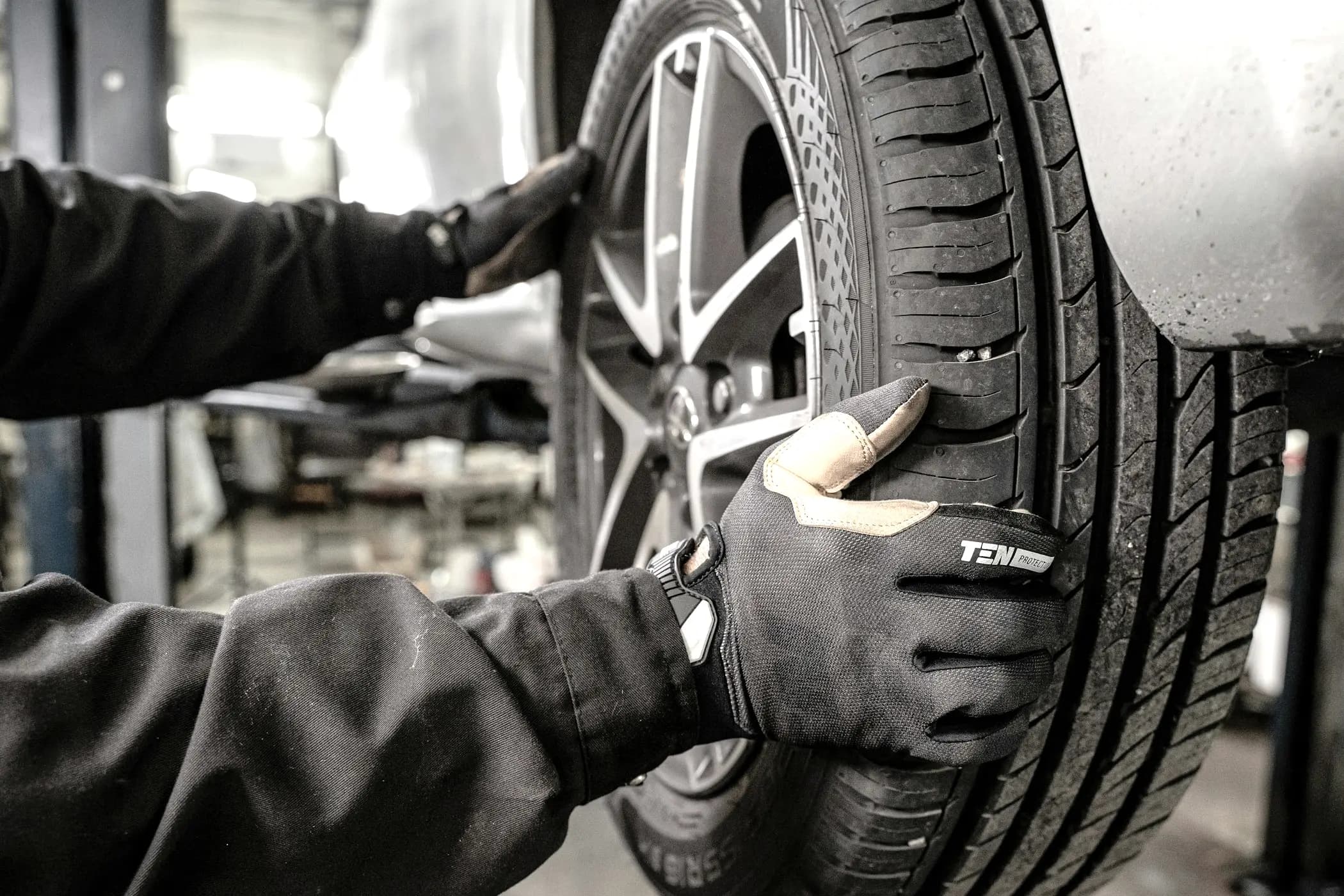
Tire Installation
New tires need to be mounted to the wheel, balanced, and fitted with the pressures and TPMS reset set correctly, or they will wear unevenly from the first mile.
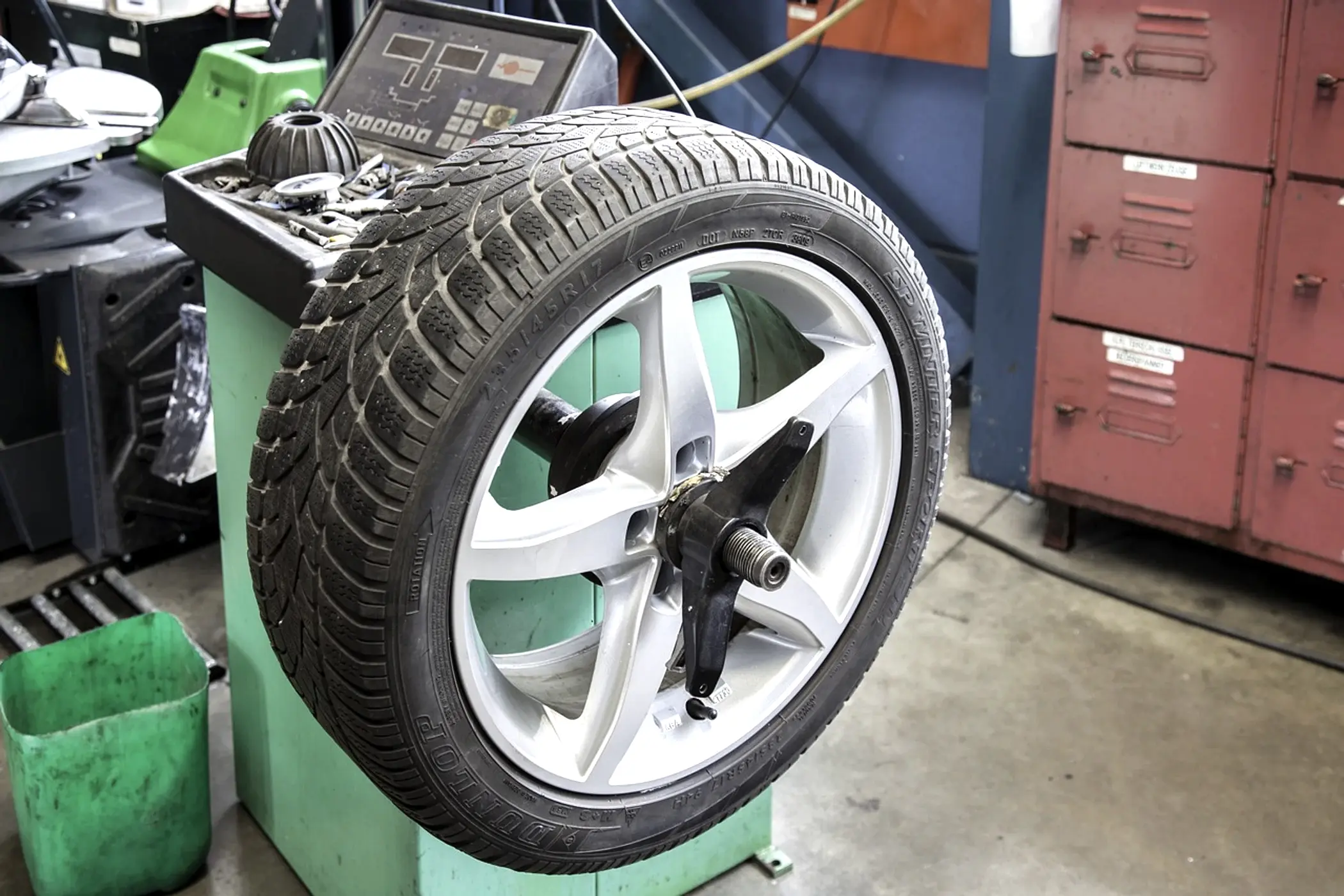
TPMS Services
If your tire pressure light is on, keeps coming back after you reset it, or stayed on after new tires were fitted, the system needs servicing rather than ignoring.
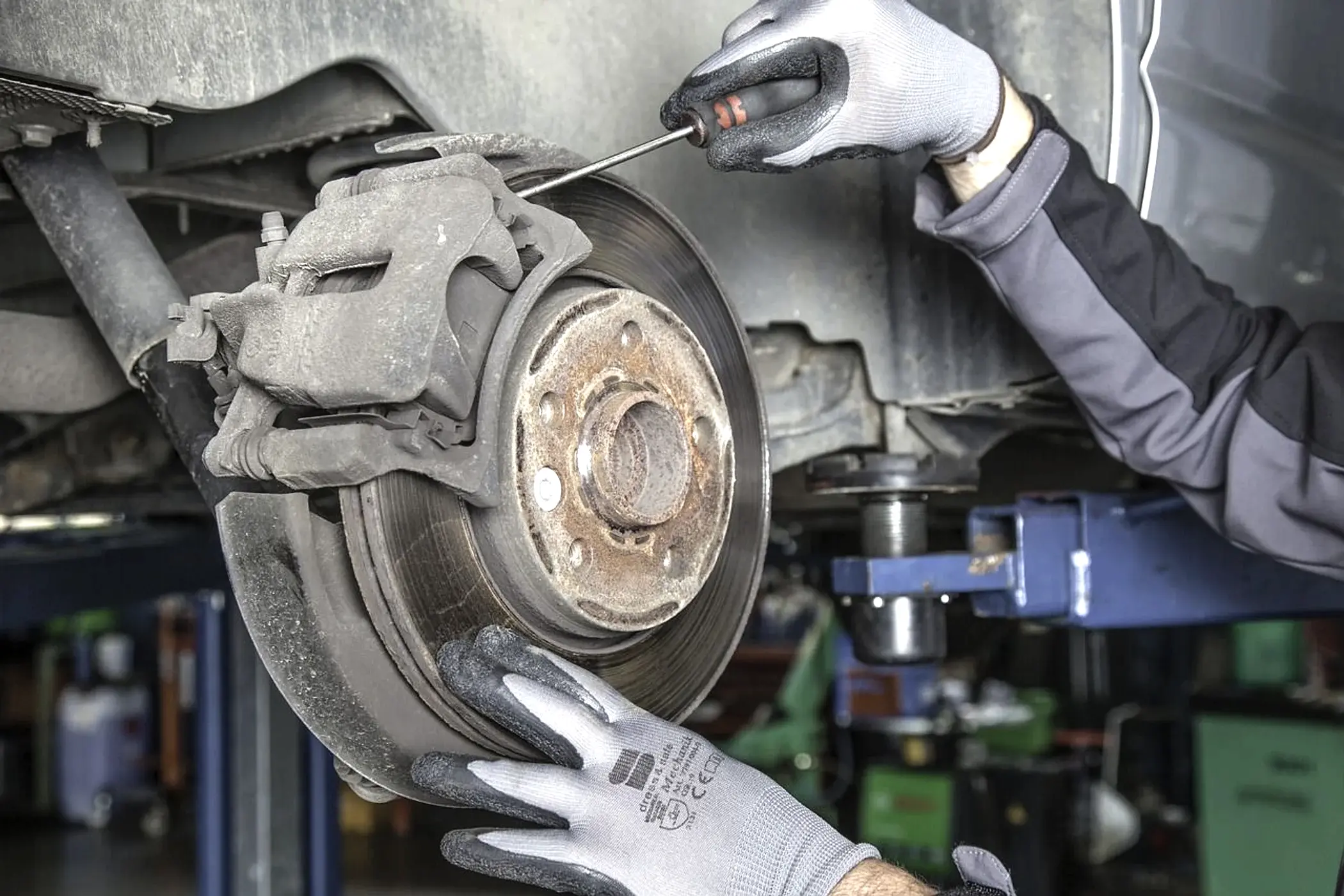
Brakes
If your brakes squeal, grind, pull to one side, or the pedal sinks further than it used to, have them inspected straight away rather than waiting to see if it settles.

Tire Shaving
Tire shaving, also called truing, removes a small amount of rubber to make a tire as close to perfectly round as possible, which cures vibration that balancing alone will not fix and improves grip and handling.