Tire Installation in Redwood City: Knowing When Yours Are Done
New tires need to be mounted to the wheel, balanced, and fitted with the pressures and TPMS reset set correctly, or they will wear unevenly from the first mile. Five Points Tire fits tires on most makes and models, balances them, and checks the vehicle over as part of the job.
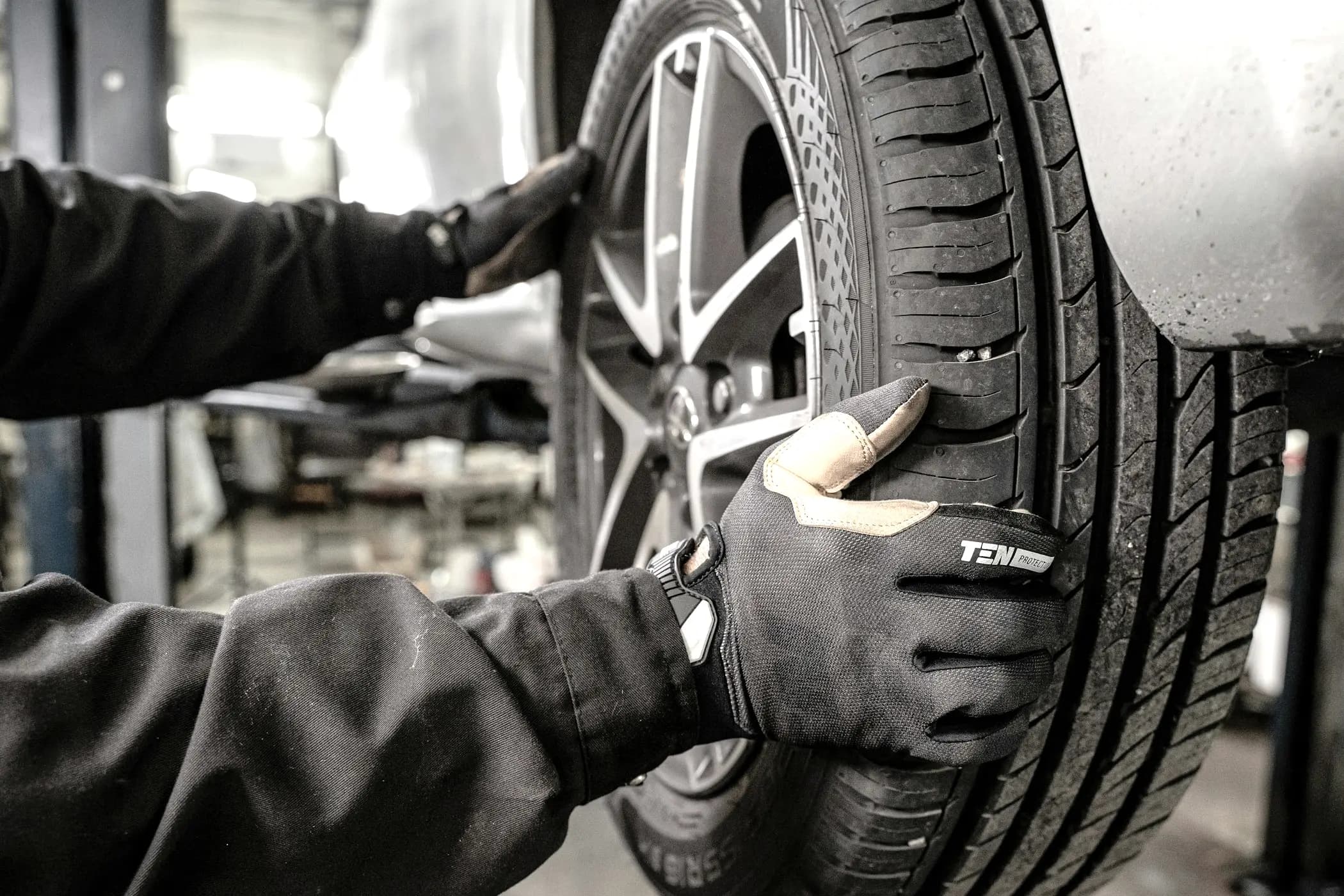
Tire installation at Five Points Tire, in short
Five Points Tire has fitted tires in Redwood City since 1964. We mount and balance on most makes and models and carry out a tire safety check as part of the job. We stock Continental, General, Toyo and Falken and can usually source a brand we do not hold. Tell us the vehicle or read us the size off the sidewall and we will come back with options and pricing.
Most people replace tires later than they should, and it's not carelessness. It's that tread wears so gradually you never notice the day it stopped being safe.
There's no warning light for it. The car feels the same on a dry road right up until the first serious rain.
So it's worth knowing the two checks that take about thirty seconds each.
How to tell when your tires are done
Check the wear bars and do the penny test. Both take about thirty seconds, and you can do them in your driveway.
Look into the tread grooves and you'll see small raised strips running across. When the tread wears level with them, the tire is at its legal limit.
The penny test is the same check without hunting for the bars.
For the penny test:
- Put a penny into the tread groove. Lincoln head first, pointing down.
- Look at how much of his head is covered. Tread covering part of it means you have depth left.
- If you can see all of his head, replace the tire. You're below the safe limit.
- Check several spots on each tire. Wear is rarely even, and one bald edge counts.
If you are only fitting two, they go on the rear. It is counterintuitive on a front-wheel drive car. A rear axle with less grip than the front is what makes a car spin rather than push wide, and oversteer is far harder to catch than understeer.
Signs you need new tires
- Tread is down to the wear bars, or a penny test shows the tread is gone
- Cracking in the rubber or in the sidewall, even with tread left
- A bulge, blister or cut in the sidewall
- Uneven wear across the tread, or one edge worn far more than the other
- Tires are over six years old regardless of how they look
- A puncture that falls outside safe repair limits
- The car aquaplanes or feels loose in the wet
Reading tire tread depth
| Check | What you see | What it means |
|---|---|---|
| Wear bars | Tread still above the bars in the grooves | Serviceable |
| Wear bars | Tread level with the bars | At the legal limit, replace |
| Penny test | Tread covers part of Lincoln's head | Tread remaining |
| Penny test | All of Lincoln's head is visible | Below limit, replace |
| Sidewall date code | Four digits, week then year, so 3021 is week 30 of 2021 | Six to ten years is the usual replacement window |
Tread depth is measured, not estimated. The penny test is the version you can do at home.
What our team does for tire installation
- 01Fit and change tires on most makes and models
- 02Balance the wheels as part of the installation
- 03Carry out a tire safety check on the vehicle
Tires age out as well as wear out
Rubber hardens and cracks over time whether you drive on it or not, so a tire with plenty of tread can still be unsafe on age alone.
That surprises anyone with a low-mileage car or a weekend vehicle, and it's why the date on the sidewall matters as much as the tread.
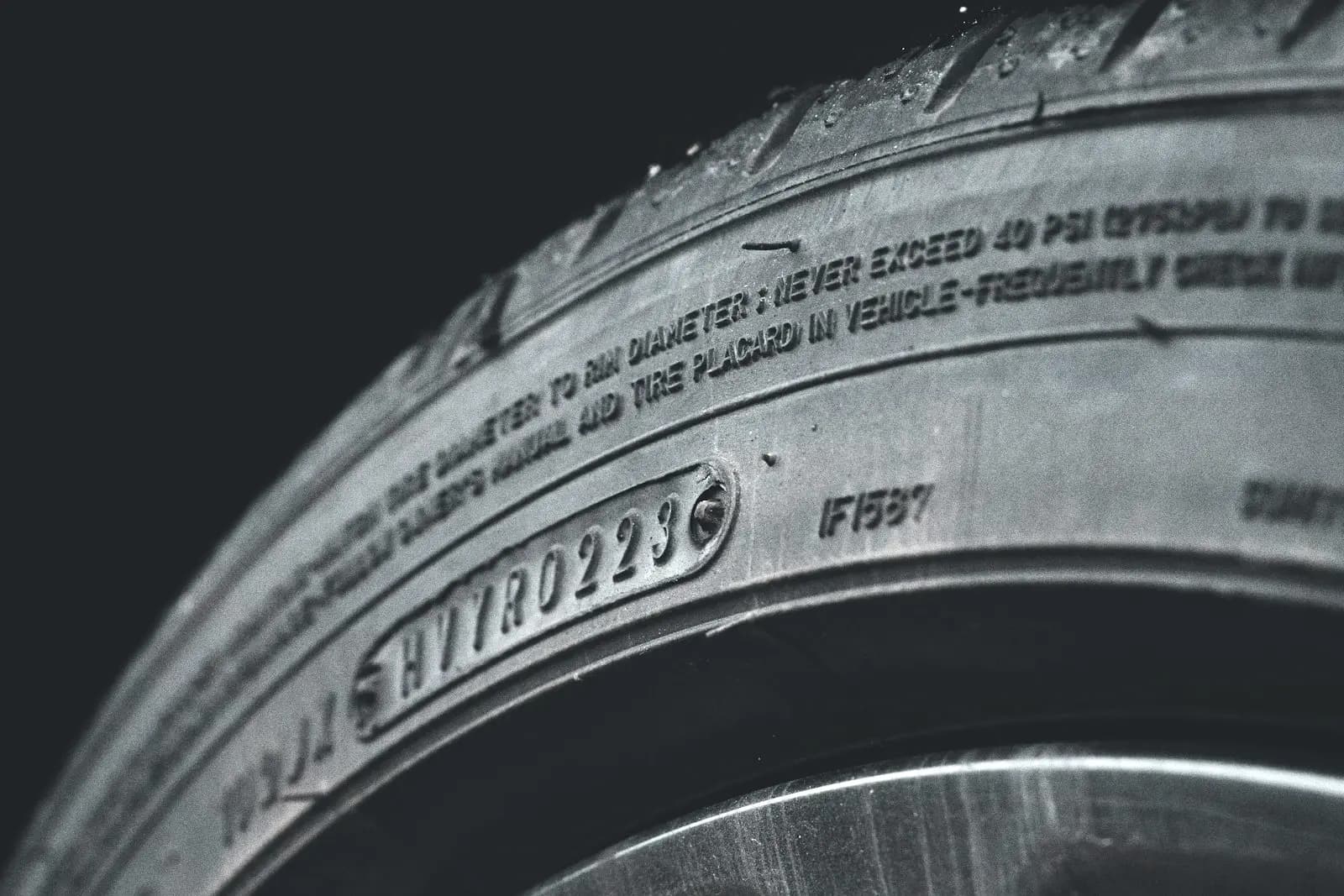
You can read the date off the sidewall. Look for a four digit code at the end of the DOT number: the first two digits are the week, the last two are the year. So 3021 is the thirtieth week of 2021.
Many manufacturers suggest replacement somewhere between six and ten years regardless of tread, and visible cracking moves that forward.
Why tires get replaced in pairs
Two tires on the same axle with different tread depths grip differently, and that shows up under braking and in the wet.
On all-wheel drive it matters more again. Different rolling diameters between axles mean the drivetrain is working against itself continuously, and that loads the transfer case and differentials.
Plenty of AWD manufacturers specify all four for exactly that reason.
| Drivetrain | Minimum replacement | Why |
|---|---|---|
| Front-wheel drive | Pair, same axle | Braking balance and wet grip |
| Rear-wheel drive | Pair, same axle | Same |
| All-wheel drive | Often all four | Diameter mismatch loads the drivetrain |
| Four-wheel drive | Often all four | Same, and worse when engaged |
Your handbook is the authority on AWD. Some are far stricter than others.
What uneven wear is telling you
| Wear pattern | Usual cause | Fix |
|---|---|---|
| Both outer edges worn | Chronic underinflation | Set pressures, find the leak |
| Center strip worn | Overinflation | Set pressures to the door placard |
| One edge only | Camber out of specification | Alignment |
| Feathered, saw-toothed across the tread | Toe out of specification | Alignment |
| Cupped or scalloped patches | Worn shocks or struts | Damper replacement |
Fitting new tires without fixing the cause wears the new set the same way.
If you're only buying two, they go on the back
New tires go on the rear axle, even on a front-wheel drive car. It's counterintuitive, and it's still correct.
The instinct is to put grip where the steering and the driving happen. But the failure mode you're protecting against is the rear stepping out.
A car with less grip at the front pushes wide, which is unsettling but easy to correct: lift off and it tucks back in.
A car with less grip at the rear spins, and catching that takes reflexes most drivers don't have.
So the new pair goes on the rear, every time, whichever wheels are driven.
Want it checked? Describe what the car is doing and Five Points Tire will tell you whether it needs new tires or something else. Call 650-365-0280, or send the form and someone calls you back. Request an appointment
Read the old set before you buy
Before you buy anything, look at how the old set wore. It'll tell you whether something else needs fixing first.
Fit a new set without addressing the cause and you'll wear them out the same way.
| Wear pattern | Usual cause | Fix before fitting |
|---|---|---|
| Both outer edges | Chronic underinflation | Set pressures, find the leak |
| Center strip only | Overinflation | Set to the door placard, not the sidewall |
| One edge only | Camber out of spec | Alignment |
| Feathered across the tread | Toe out of spec | Alignment |
| Cupped or scalloped patches | Worn shocks or struts | Dampers |
| Flat spot in one place | Locked wheel or long-term parking | Nothing, but replace the tire |
An alignment costs a fraction of a set of tires. Check it first.
Reading the sidewall
The string of numbers on your sidewall is a size, and knowing how to read it makes buying tires much less mysterious.
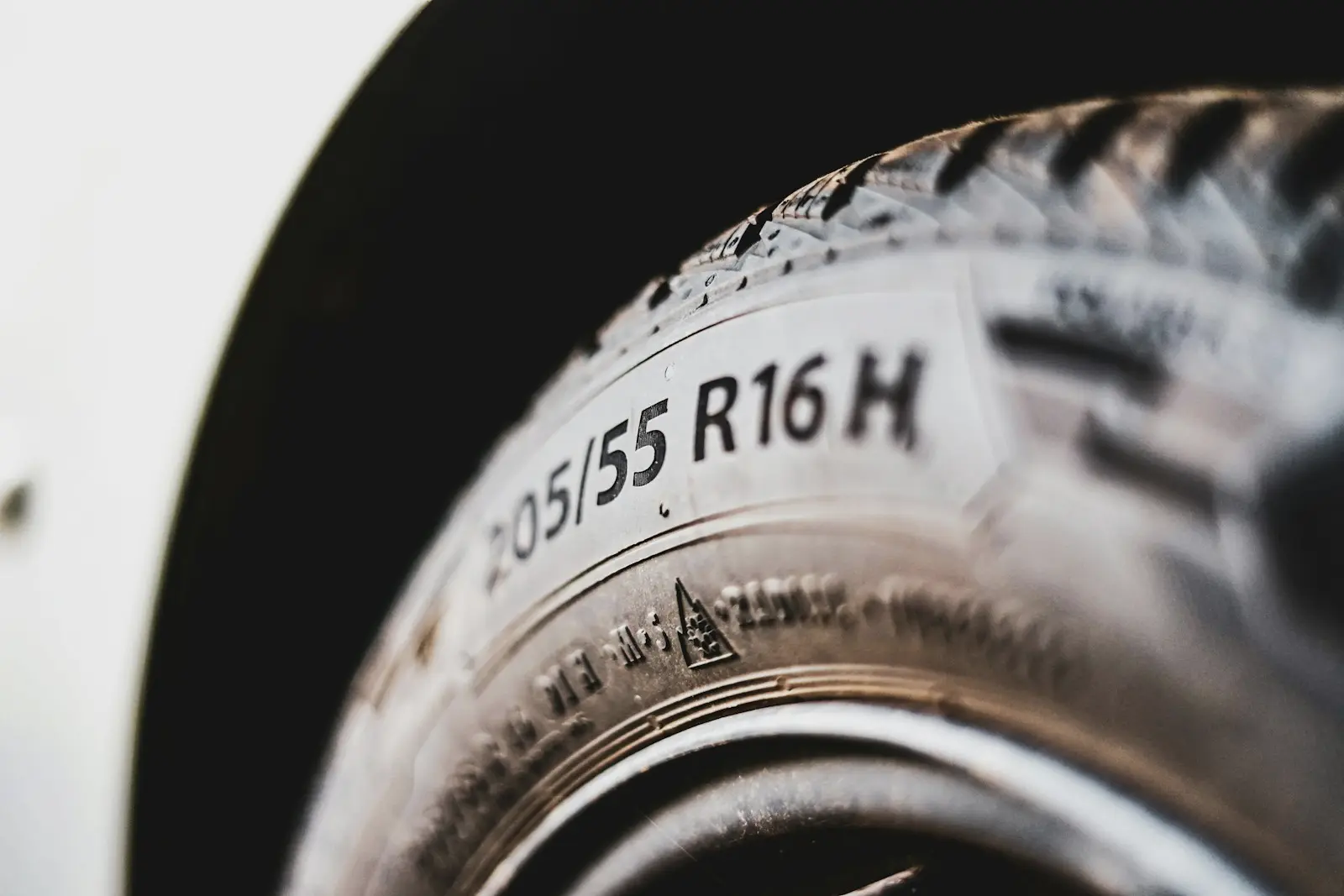
Take 225/65R17. That's a tread 225mm wide, a sidewall 65 percent of that width, radial construction, on a 17 inch wheel.
There's usually a load index and a speed rating after it. Both matter, and neither should go down from what the manufacturer specified.
- Width: In millimeters, across the tread.
- Aspect ratio: Sidewall height as a percentage of width. Lower means a shorter sidewall.
- Construction: R for radial, which is essentially everything now.
- Wheel diameter: In inches, confusingly.
- Load index: How much weight the tire can carry. Never go below spec.
- Speed rating: The letter at the end. Also never go below spec.
Common tire buying mistakes to avoid
- Waiting for the tread to be visibly gone. Wet grip falls off long before the tread does. The penny test is the honest check.
- Ignoring the date code on a low-mileage car. Plenty of tread and ten years of age is still a tire that needs replacing.
- Putting the new pair on the front. Understeer is recoverable. Oversteer usually isn't. New tires go on the rear.
- Mixing sizes or brands across an axle. Different constructions grip differently, and on AWD a diameter mismatch damages the drivetrain.
- Inflating to the number on the sidewall. That's the tire's maximum, not your car's recommendation. Use the placard in the door jamb.
- Skipping the alignment check. If the old set wore unevenly, the new set will too.
The bottom line
Do the penny test, check the date code, and look at how the old set wore.
Those three checks tell you whether you need tires, how urgently, and whether anything else needs sorting first.
We fit tires on most makes and models, we stock Continental, General, Toyo and Falken, and we can usually source whatever we don't hold.
New tires are the moment to get the rest right. They need wheel balancing before they leave, a wheel alignment stops them wearing out early, and the TPMS sensors have to be relearned to the car.
Read the size off your sidewall to Five Points Tire on 650-365-0280 and we'll come back with options that suit what you actually drive.
Need new tires? Tell us your vehicle or tire size and we'll come back with options and pricing. Find tires for my vehicle
Tire installation questions we get asked
Question not on the list? Ask us directly.
How do I know when my tires need replacing?
- Check the tread against the wear bars in the grooves, or use the penny test: head down into the groove, and if you can see all of Lincoln's head the tread is too low. Also replace for sidewall cracking, a bulge, or age, regardless of how much tread is left.
Do I need to replace all four tires at once?
- Not always, but replace in pairs across an axle at minimum. On all-wheel drive vehicles all four is often recommended, because a difference in rolling diameter between the axles makes the drivetrain fight itself. Your handbook will say what your vehicle needs.
Should new tires go on the front or the back?
- On the back, in almost all cases, even on a front-wheel drive car. A rear axle with less grip than the front is what makes a car step out in the wet, and that is much harder to catch than the front washing wide.
How old is too old for a tire?
- Rubber hardens and cracks with age even when a tire is barely used. The four digit code on the sidewall gives the week and year it was made. Many manufacturers suggest replacement at six to ten years regardless of tread, and any cracking you can see moves that forward.
Do tires need balancing when they are fitted?
- Yes. A new tire and wheel assembly is never perfectly even in weight distribution, and balancing corrects that with small counterweights. Without it you get a vibration through the wheel or the seat at speed, and the tire wears in patches. Five Points Tire balances every tire it fits, because an unbalanced new tire wears itself out proving the point.
Related services
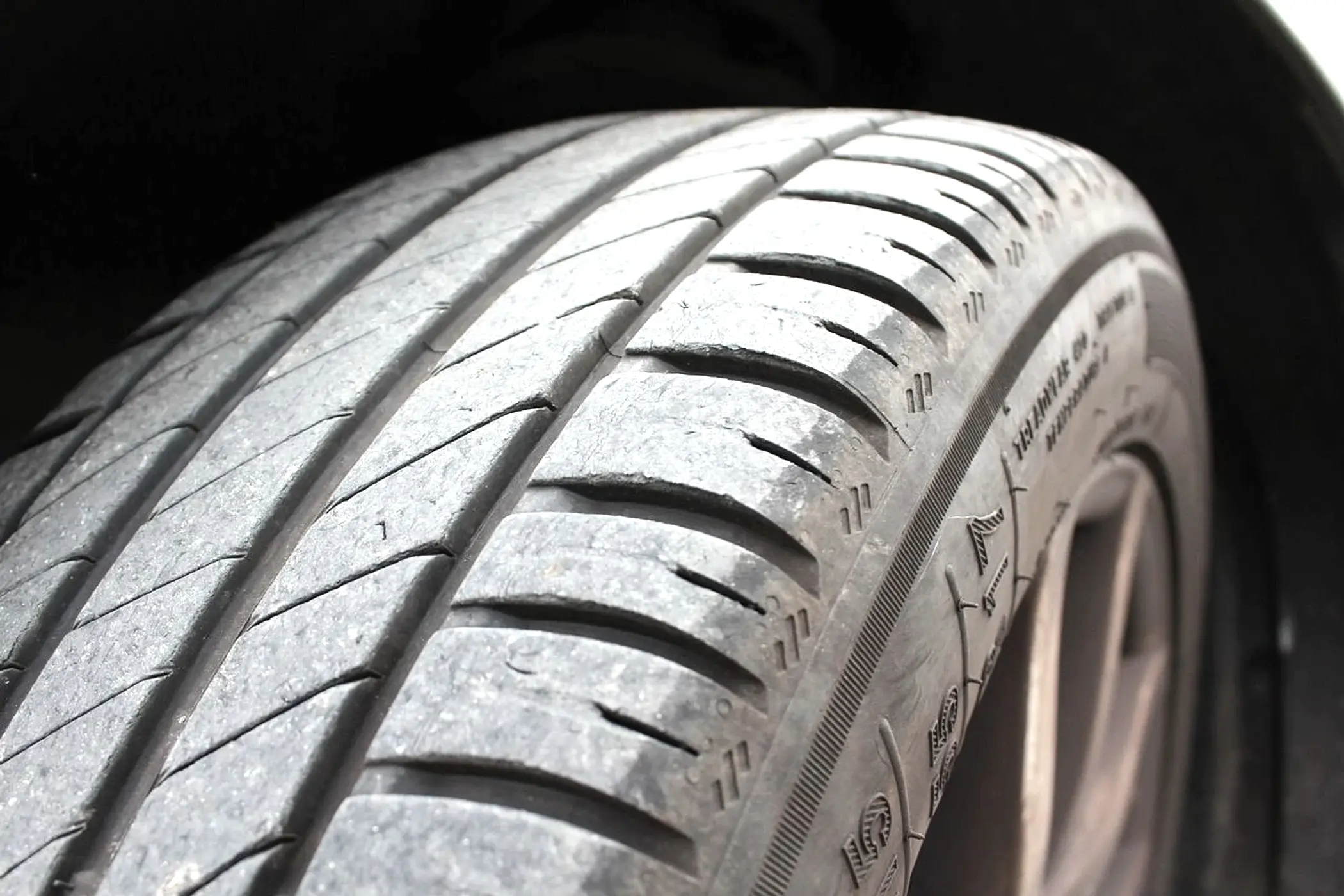
Wheel Balancing
If you feel a vibration through the steering wheel, the seat or the floor that appears at a particular speed and fades again, the wheels are almost certainly out of balance.
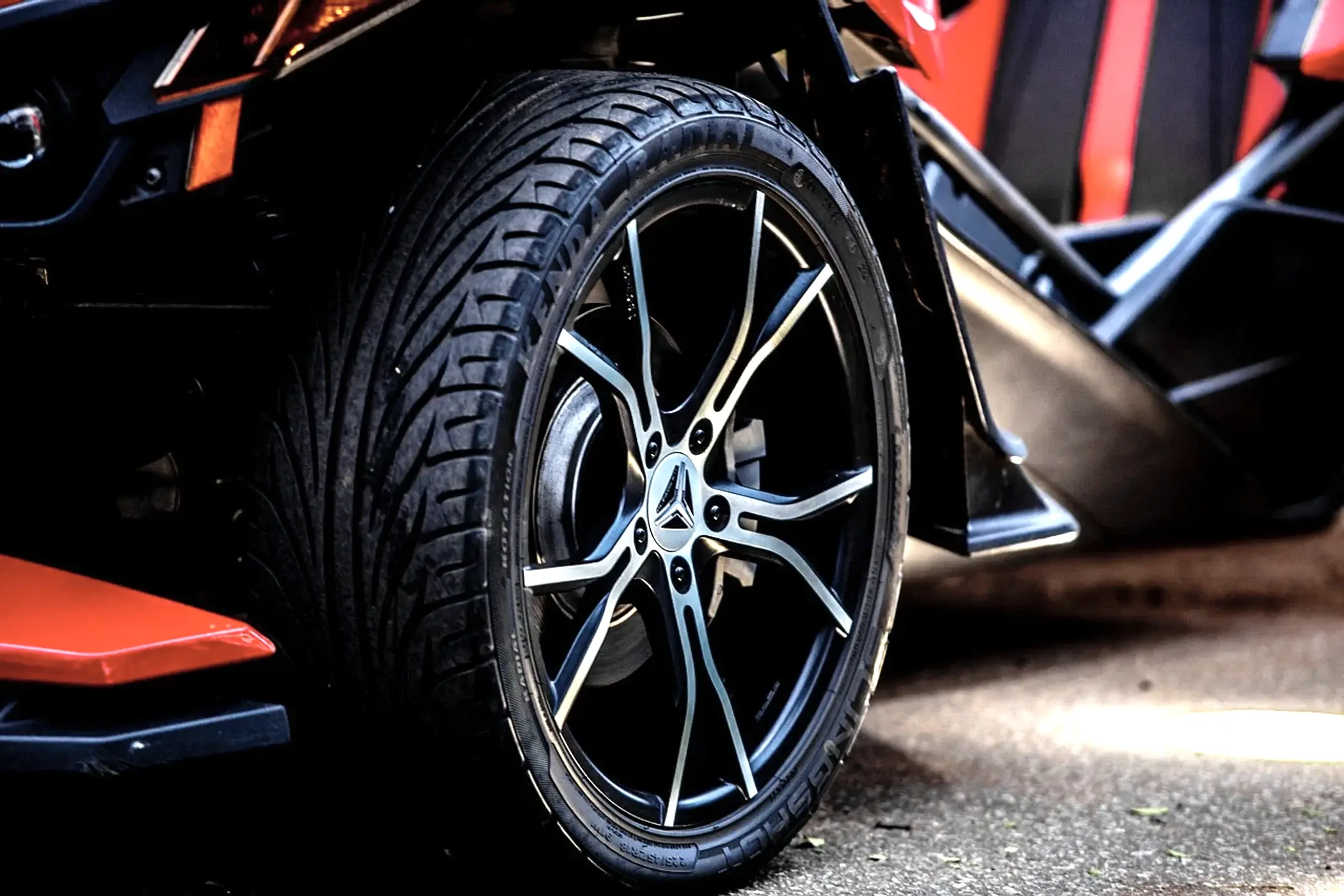
Wheel Alignment
If your car pulls to one side, the steering wheel sits off center when you are going straight, or your tires are wearing on one edge, the alignment is out.
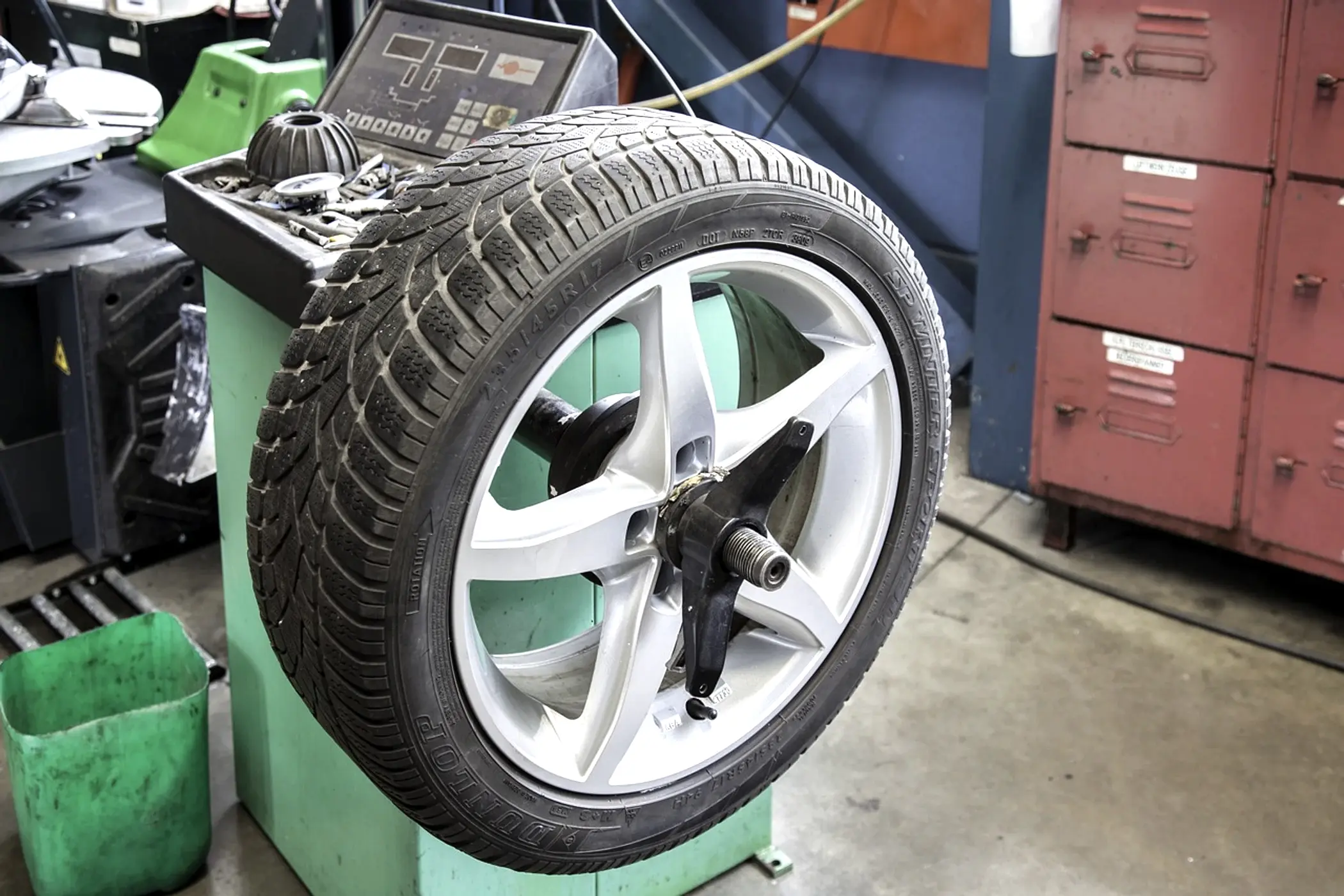
TPMS Services
If your tire pressure light is on, keeps coming back after you reset it, or stayed on after new tires were fitted, the system needs servicing rather than ignoring.
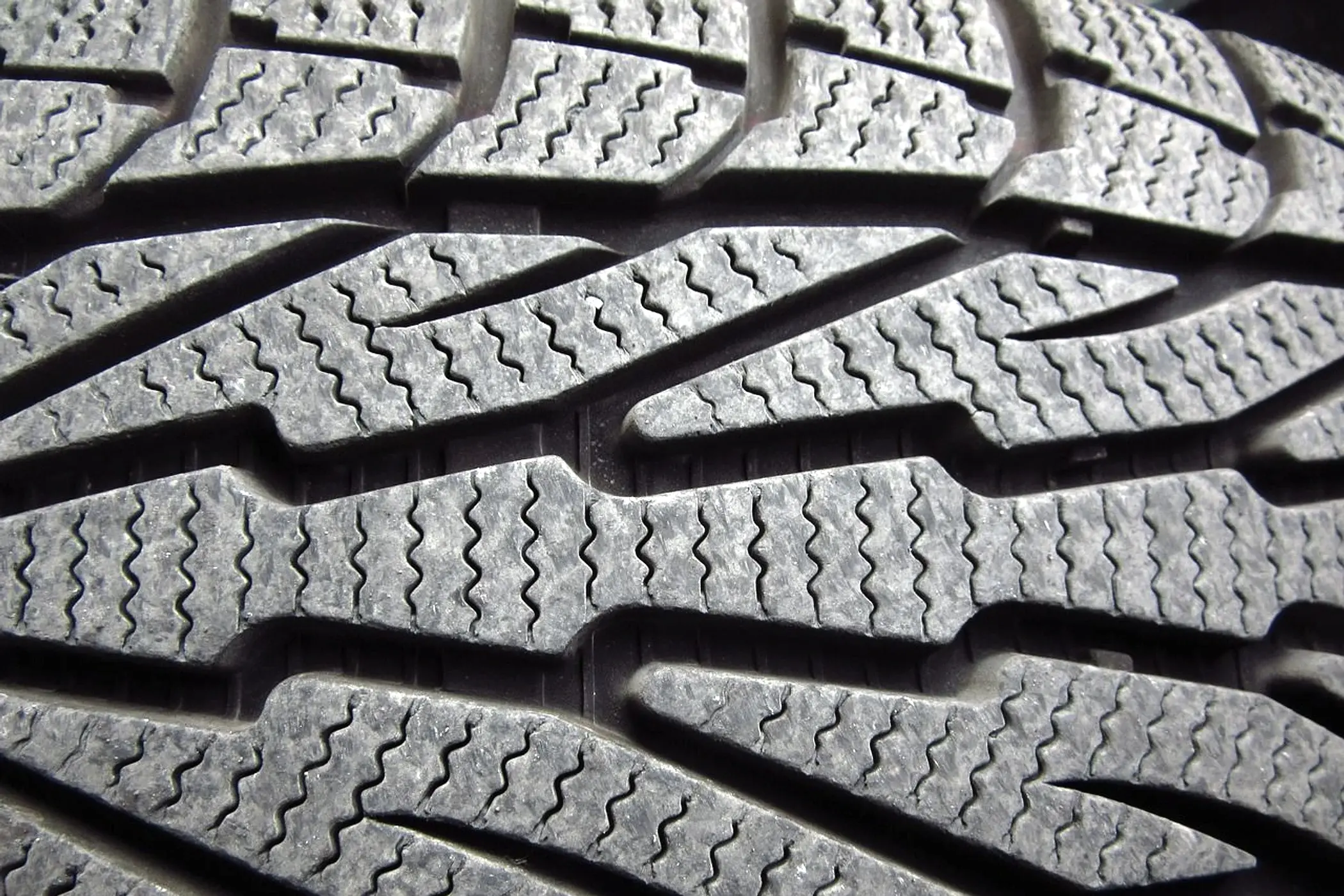
Tire Rotation
Tires wear at different rates depending on which corner they sit at, so moving them around at regular intervals is what makes a set wear evenly and last its full life.
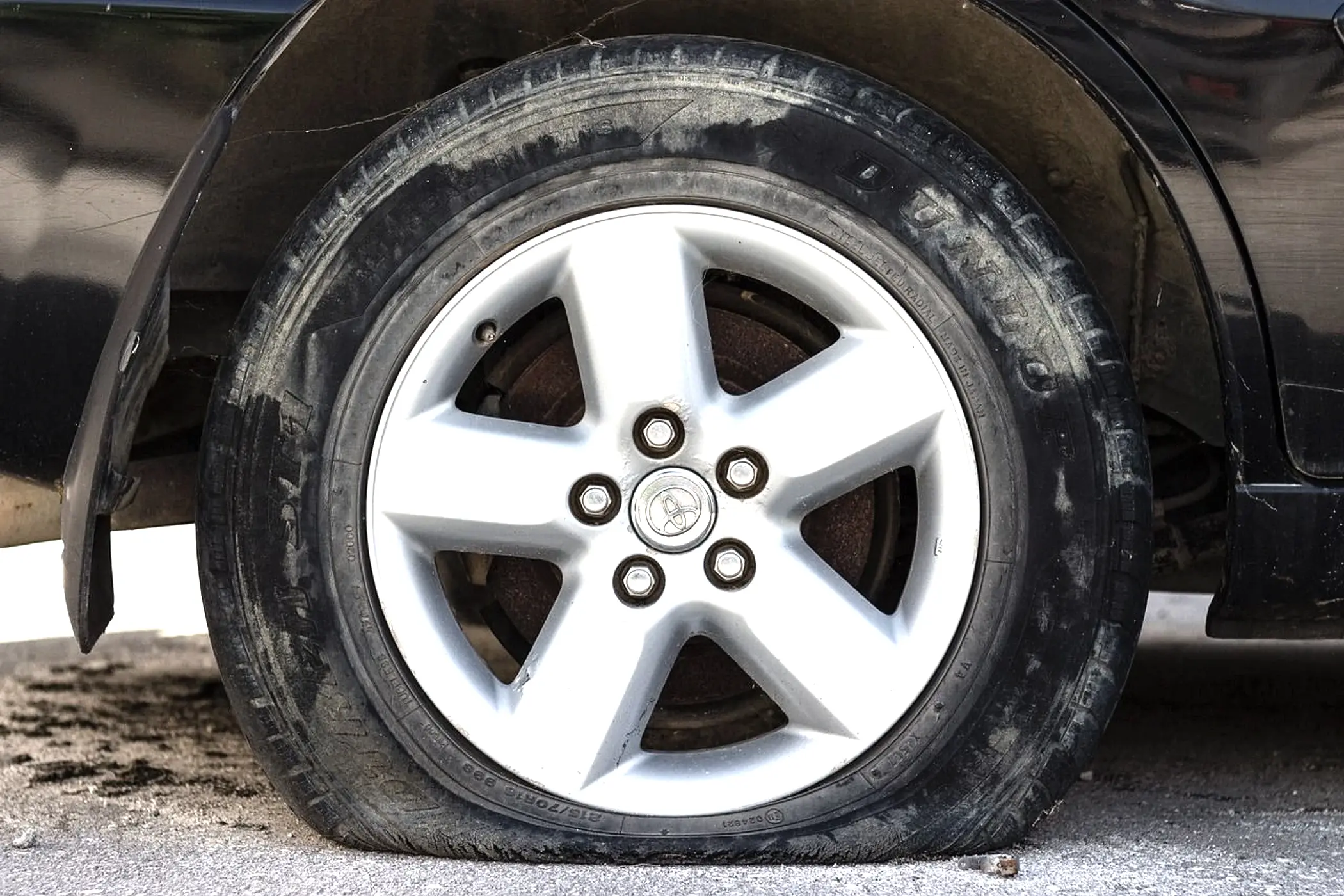
Flat Repair
If you have picked up a puncture, whether the tire is flat now or just losing pressure over a few days, bring it in and we will find the leak and tell you honestly whether it can be repaired or needs replacing.
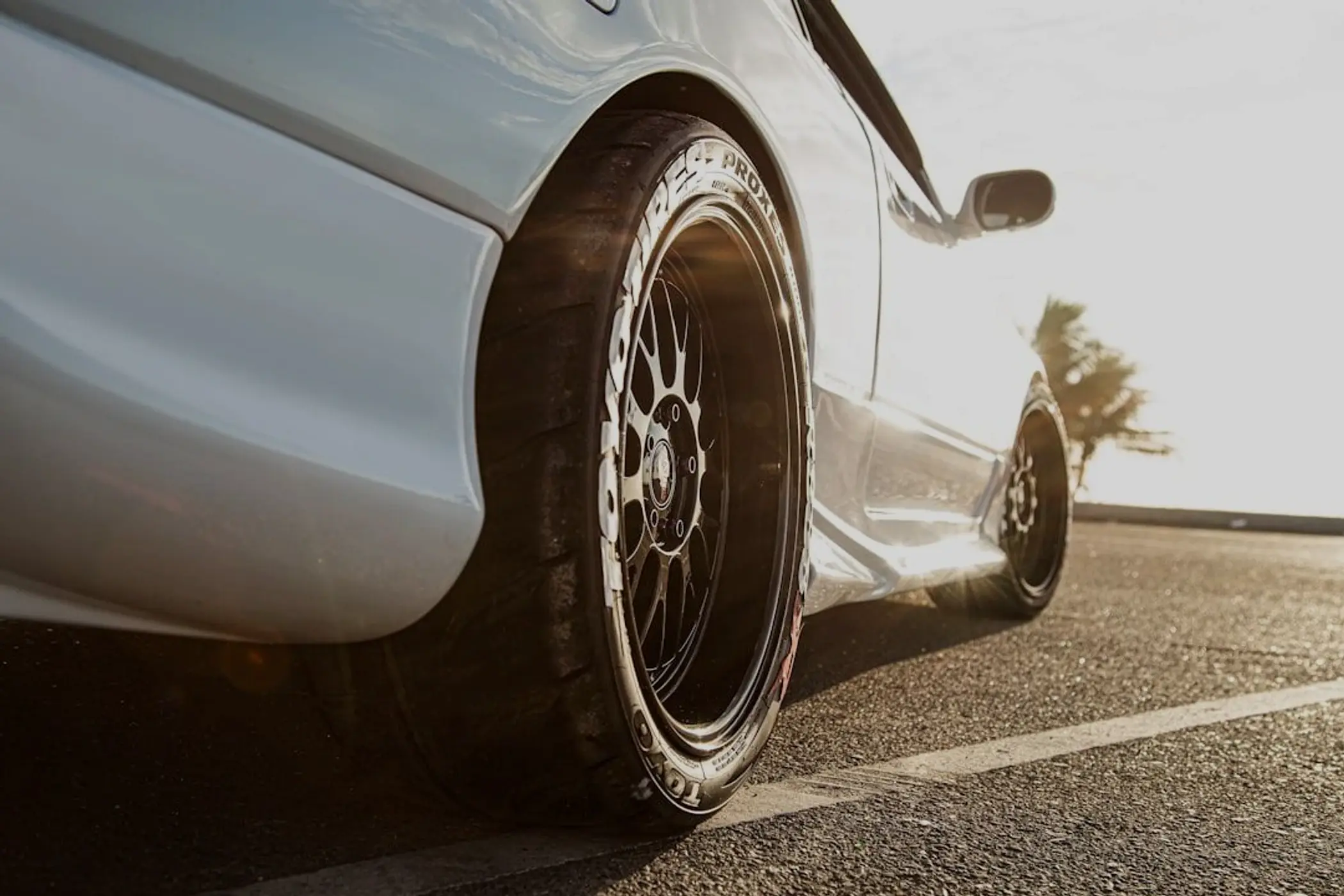
Custom Wheels
New wheels have to match your vehicle on bolt pattern, offset, load rating and brake clearance before the look matters at all.