Brake Repair in Redwood City: What Each Noise Means
If your brakes squeal, grind, pull to one side, or the pedal sinks further than it used to, have them inspected straight away rather than waiting to see if it settles. Bring the car to Five Points Tire and we will inspect the whole braking system to find the actual cause instead of replacing parts on a guess.
Brake repair at Five Points Tire, in short
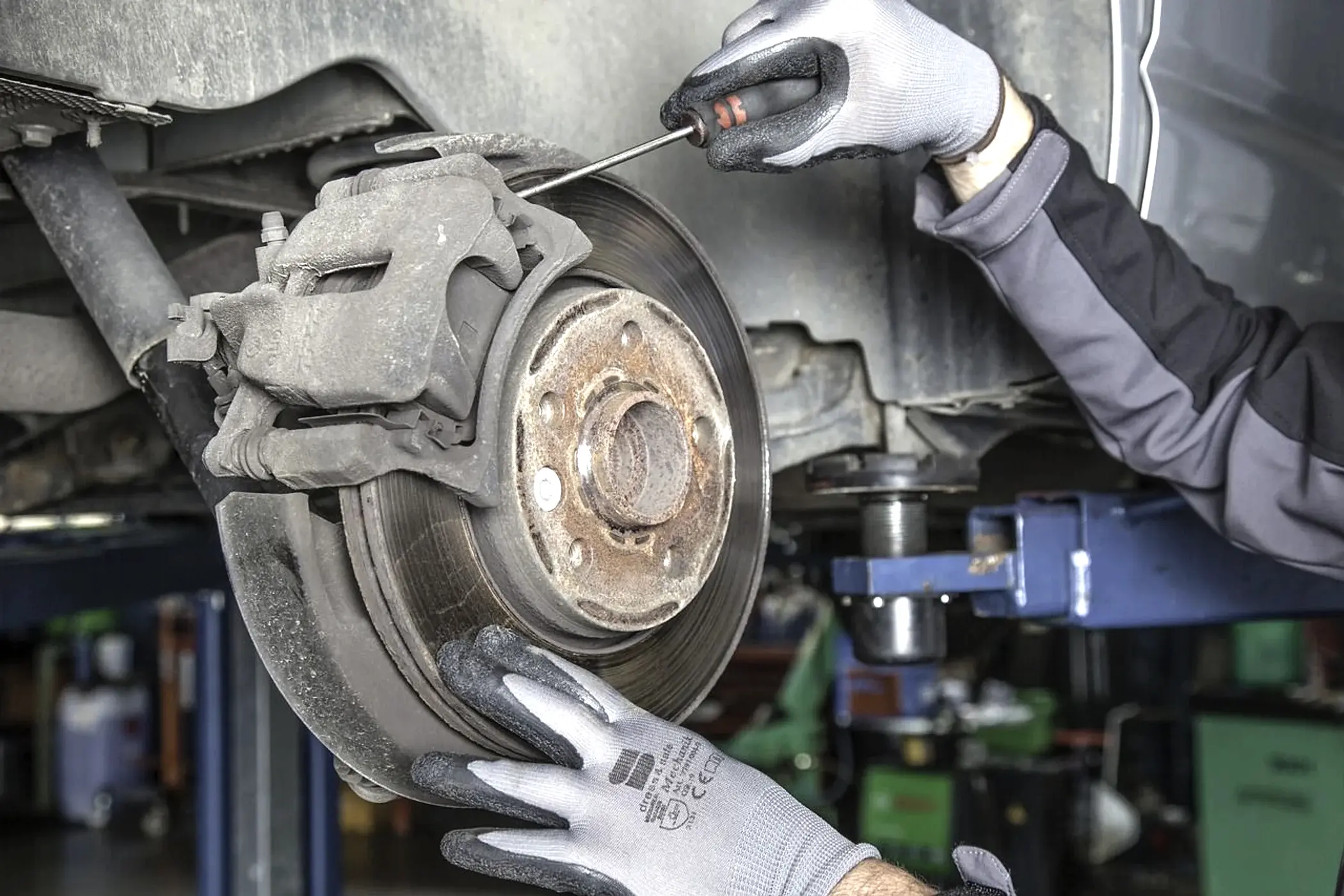
Five Points Tire has repaired brakes at 2115 El Camino Real in Redwood City since 1964. Bring the car in with a squeal, a grind, a pull or a soft pedal and we inspect the whole braking system to find the actual cause before quoting any work, rather than replacing pads on a guess. Where the pedal has gone soft we bleed the brakes or flush the fluid completely. We serve Redwood City, Atherton and Menlo Park, and free pickup is available on most repairs.
Your brakes are the one system on your car where waiting a week actually changes the bill.
Pads are a wear item. They're designed to be replaced, and replacing them on time is a routine job. Leave them long enough and they take the rotors with them, and now you're paying for both.
So the useful skill isn't knowing how to fix brakes. It's knowing what your car is telling you, and how urgent it is.
Here's how to read the signs, what each one usually means, and what actually happens when you bring the car to us in Redwood City.
How your brakes actually work
Your brakes work by squeezing. A caliper clamps two pads against a rotor that spins with the wheel, and friction slows the car. That friction becomes heat, and rotor faces can pass 400 degrees Celsius on a hard stop. A new pad starts with roughly 10 to 12 mm of friction material.
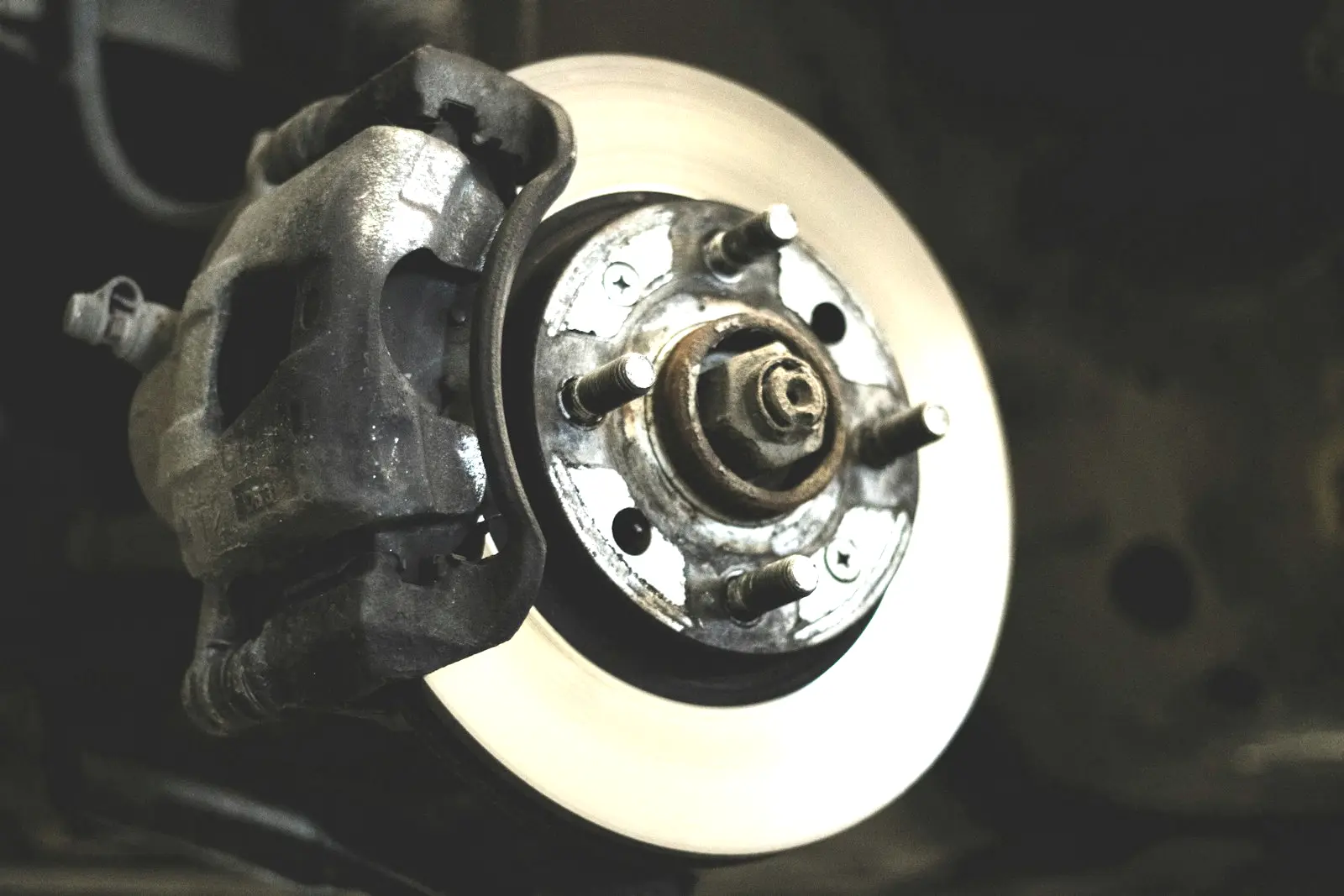
Almost every car on the road today uses disc brakes at the front, and most use them at the back too.
That friction has to go somewhere, and it goes into wearing down the pads. That's not a fault. That's the design.
Everything else in the system exists to make that squeeze happen reliably, repeatedly, and without fading when things get hot.
The parts you'll hear us name, and what each one does:
- Rotor: The metal disc that spins with your wheel. This is what the pads clamp onto.
- Pads: The friction material. A wear item, designed to be replaced.
- Caliper: The clamp. It holds the pads and squeezes them against the rotor.
- Brake fluid: Carries your foot pressure to the caliper. It doesn't compress, which is the whole trick.
- Master cylinder: Converts pedal pressure into fluid pressure.
- Booster: Uses engine vacuum to multiply how hard you're actually pushing.
Disc brakes
The rotor turns with the wheel while the caliper stays put. Press the pedal and the booster does most of the work for you.
Pad material matters more than people expect, and it's worth knowing which you have.
| Pad type | Good at | Trade-off |
|---|---|---|
| Ceramic | Quiet, low dust, long life | Less bite when very cold |
| Semi-metallic | Strong bite, handles heat well | Noisier, more dust, harder on rotors |
| Organic | Soft, quiet, easy on rotors | Wears faster, fades sooner under heat |
Most daily drivers come from the factory on ceramic or semi-metallic.
Drum brakes
You'll still find drum brakes on the rear of some older cars and a few economy models.
Instead of a rotor and caliper, two curved shoes push outward against the inside of a spinning drum.
They're cheaper to build and they self-assist, which makes them good parking brakes. They also trap heat, which is why manufacturers moved away from them on the front by the mid-1980s.
ABS and the electronics on top
Anti-lock braking sensors watch how fast each wheel is turning. If one starts to lock, the system pumps that brake far faster than you could.
That's what stops you skidding, and it's why you can steer while braking hard. Every car built after 2011 has it.
Most modern cars layer more on top of the same hardware.
- Electronic brakeforce distribution: Sends more braking to the axle carrying more weight.
- Brake assist: Detects a panic stop and applies full pressure before you finish pushing.
- Stability control: Brakes individual wheels to pull the car straight in a slide.
- Hill hold: Keeps the brakes on for a second or two when you pull away on a grade.
Grinding is not a warning, it is damage. A squeal buys you time. A grind means the friction material is already gone and the rotor is being cut every time you stop. It turns a pad replacement into a pad and rotor replacement, and your stopping distance is longer while you decide.
Signs you need brake repair
- A high squeal when you slow down that goes away as you brake harder
- A grinding or scraping noise, which usually means the pad material is gone
- The pedal feels soft or spongy, or sinks slowly while you hold it at a light
- The car pulls to one side when you brake
- The steering wheel or pedal shudders as you slow from higher speeds
- The brake warning light stays on after you release the handbrake
- You are topping up brake fluid, which you should never need to do
Brake symptoms and what they usually mean
| What you notice | What it usually means | How urgent |
|---|---|---|
| High squeal that fades when you brake harder | The wear indicator is contacting the rotor | Book it in |
| Grinding or scraping | Pad material is gone and metal is on the rotor | Urgent |
| Soft or slowly sinking pedal | Air or moisture in the fluid, or a leak | Urgent |
| Shudder through the wheel when slowing from speed | Rotors no longer running true | Soon |
| Pulls to one side under braking | One side working harder, often a sticking caliper | Soon |
| Brake fluid needing regular topping up | A leak in a sealed hydraulic system | Urgent |
General guidance. Any of these is worth having measured rather than guessed at.
What our team does for brake repair
- 01Inspect the full braking system to identify the cause before quoting any work
- 02Bleed the brakes or flush the brake fluid completely where the pedal has gone soft
Why your brakes squeal, and when it's actually serious
A squeal that shows up when you slow gently, then disappears when you brake harder, is usually the wear indicator. That's a small steel tab, built into the pad, positioned to contact the rotor once friction material drops to around 2 to 3 mm. It's designed to make that noise.
That's a small metal tab built into the pad. Once the friction material wears down far enough, the tab starts touching the rotor and makes exactly that noise.
It's a warning, and it's designed to be annoying. The good news is that it means you still have some pad left.
Not every squeal is the indicator, though.
Here's how to tell the difference before you book anything:
| What you hear | When | Usually means | How urgent |
|---|---|---|---|
| High squeal | Light braking, goes away when you brake hard | Wear indicator | Book it in |
| Squeal | First stop of a damp morning, then clears | Surface rust on the rotors | Monitor |
| Squeal | Only when cold, clears after a few stops | Glazed pads or normal bedding-in | Monitor |
| Constant squeal | All the time, any speed | Stuck caliper or debris trapped in the pad | Soon |
| Grind or scrape | Every stop | Pad material gone, metal on rotor | Urgent |
A squeal buys you time. A grind does not.
Grinding brakes are different, and urgent
Grinding means the friction material is gone. The steel backing plate is now cutting into the rotor on every stop. Stopping distance grows immediately. Every rotor carries a minimum thickness stamped into its hub, usually about 2 mm below where it started, and metal-on-metal contact clears that margin fast.
Grinding isn't a warning. Grinding is the sound of the warning having been missed.
Two things happen from there. Your stopping distance gets longer, and the rotor gets cut a little more every time you brake.
That's the difference between a pad job and a pad-and-rotor job.
It's also why we treat grinding as same-week rather than same-month. Every stop you make while it's grinding is adding to the parts list.
If your brakes are grinding, do these four things:
- Leave more room. Assume your stopping distance is longer than you're used to.
- Stay off the freeway if you can. Repeated high-speed stops do the most rotor damage.
- Don't ride the brake downhill. Heat makes a bad situation worse quickly.
- Call and book it. Tell us it's grinding and we'll tell you whether to drive it in.
What a soft or sinking pedal means
A spongy pedal, or one that sinks while you hold it at a light, means air or moisture in the hydraulics. It isn't worn pads. Brake fluid absorbs water out of the air, and DOT 3 fluid that boils near 205 degrees Celsius when fresh can fall to about 140 once it's wet.
Brakes work because fluid doesn't compress. Air does. So air in the lines gives you a pedal that feels soft and vague.
Old fluid causes the same thing a different way. Brake fluid absorbs water out of the air over time, and water boils a lot sooner than fluid does.
That's why old fluid can go soft on you exactly when you're braking hardest, coming down a grade or after a few hard stops in traffic.
A pedal problem is worth acting on faster than a pad problem, because unlike wear it can get worse suddenly rather than gradually.
| Pedal feel | Likely cause | How urgent |
|---|---|---|
| Spongy, but holds | Air in the lines, or moisture in old fluid | Soon |
| Slowly sinks while held | Failing master cylinder, or a leak | Urgent |
| Goes to the floor | Major fluid loss | Stop driving |
| Hard, needs a shove | Brake booster or vacuum supply | Urgent |
| Fine cold, soft when hot | Fluid boiling, usually overdue for a flush | Soon |
Anything on this list is worth a call rather than a wait-and-see.
Why mileage will not tell you. Stop-start traffic on El Camino Real wears pads far faster than the same mileage on the freeway. That is why pad thickness is measured at inspection rather than estimated from the odometer.
Why your steering wheel shakes when you brake
If you feel a shudder through the wheel as you slow from freeway speed, your rotors probably aren't running flat any more. Tolerances here are tight. Most manufacturers allow under 0.05 mm of lateral runout, so a warp you could never see by eye is enough to reach your hands.
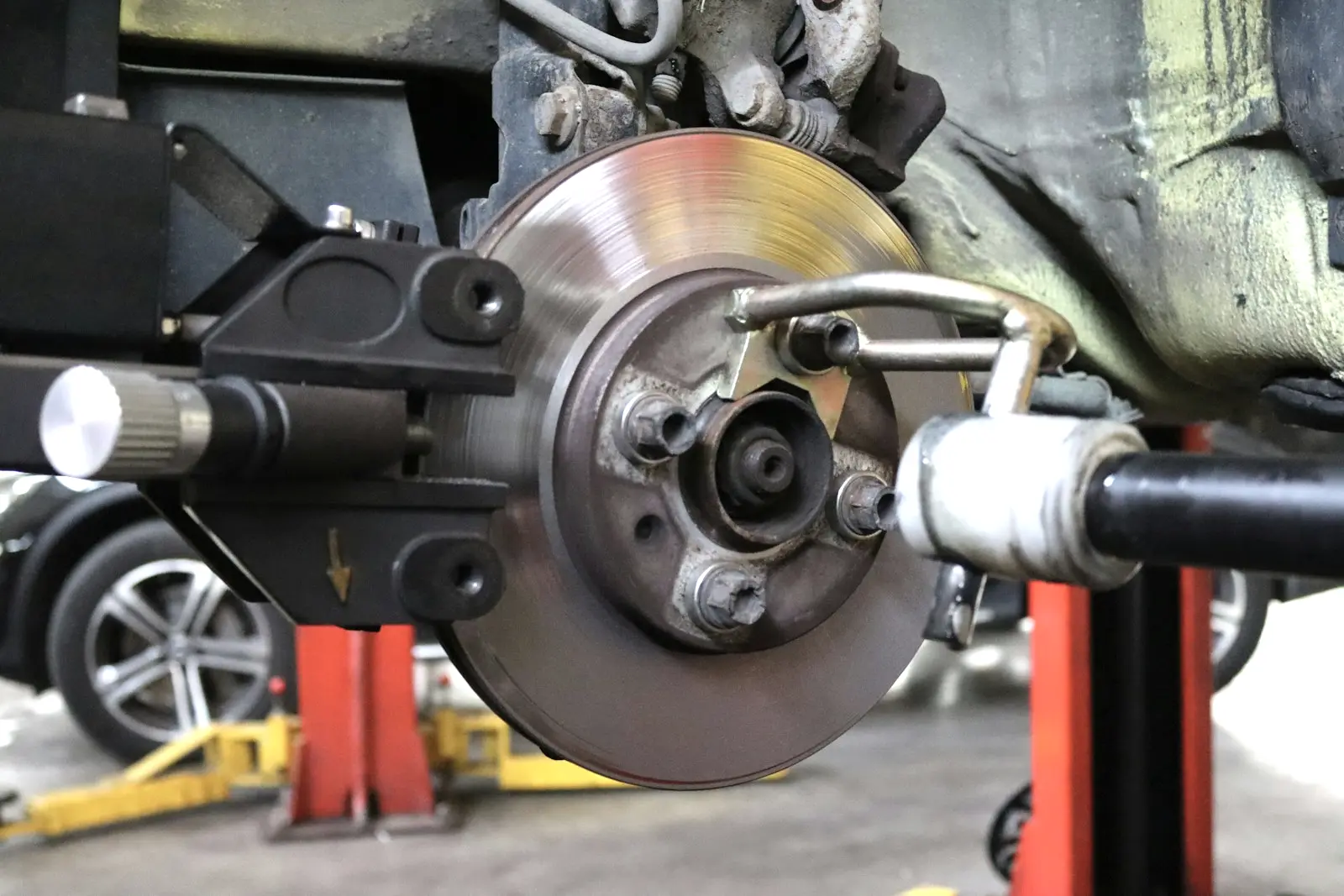
The pads grab slightly unevenly as the high spots pass, and you feel that as a pulse.
People call this warping, though most of the time it's uneven deposits of pad material rather than the metal actually bending.
Either way the fix is the same. The rotor surface has to be made true again, or the rotor gets replaced.
Where you feel it tells you which end to look at first.
Where you drive changes how fast this arrives. Long descents hold the brakes on instead of letting them cool, so a car that regularly comes down Woodside Road or the 280 grade toward Emerald Hills sees hotter fluid and harder-worked rotors than one that never leaves the flat between Redwood Shores and Menlo Park.
- Through the steering wheel. Front rotors, most of the time.
- Through the seat or the floor. Rear rotors.
- Through the pedal itself. Either end, and usually more advanced.
- Only at low speed, like a groan. More likely a stuck caliper than a rotor.
Want it checked? Describe what the car is doing and Five Points Tire will tell you whether it needs brake repair or something else. Call 650-365-0280, or send the form and someone calls you back. Request an appointment
Pulling to one side when you brake
A car that tracks straight normally but pulls under braking is telling you one side is doing more work than the other. The usual cause is a sticking caliper, where the metal clamp no longer releases cleanly. Uneven pad thickness across an axle, more than about 2 mm, points the same way.
The usual suspect is a sticking caliper. Guide pins seize, the piston stops retracting cleanly, and that corner drags.
You'll sometimes smell it before you diagnose it, and the wheel on that side may run noticeably hotter after a drive.
It's worth catching early, because a dragging caliper cooks its own pad and rotor and burns fuel the whole time.
Other things that produce the same pull:
- Uneven tire pressures: Cheapest thing to rule out, so check it first.
- A collapsed brake hose: Acts like a one-way valve and holds pressure on one side.
- Contaminated pad: Oil or fluid on one pad changes how it grips.
- Worn suspension: Lets the geometry move under braking load.
You should never be topping up brake fluid
You have a leak. If you're adding brake fluid on any schedule at all, it's going somewhere, because the system is sealed and nothing in it gets consumed. Pads wearing down will drop the level slightly as pistons extend. Needing 2 top-ups in a year is a different story.
The level does drop a little as your pads wear. That's normal, and it's gradual.
Anything faster than that is fluid finding a way out. Topping it up hides the leak and buys you a few weeks. Finding the leak fixes the car.
Fluid condition matters as much as level, and it's easy to read.
| Fluid looks | What it means |
|---|---|
| Clear to light amber | Healthy |
| Darker amber | Aging, worth testing for moisture |
| Brown | Overdue for a flush |
| Black, or cloudy | Contaminated, flush it |
| Level dropping steadily | A leak, not consumption |
Brake fluid pulls moisture out of the air, so it ages on a clock as well as on mileage.
How long do brake pads actually last?
There's no number we can give you honestly, and anyone who quotes one is guessing. Published ranges run from about 25,000 to 70,000 miles, which is wide enough to be useless on its own. Stop-and-go miles on El Camino Real wear pads faster than the same distance on 280.
It depends far more on how and where you drive than on how far.
Stop-and-go traffic on El Camino Real wears pads much faster than the same mileage on 101. Towing wears them faster. So does a heavier car, and so does riding the brake downhill.
That's why we measure pad thickness at inspection instead of estimating it from your odometer. You get a number, and you can plan around it.
What shortens pad life fastest:
- Stop-and-go traffic: Every light is a full stop from speed.
- Hills: Riding the brake down a grade puts heat into the pad with no time to shed it.
- Towing or hauling: More weight to stop, every single time.
- Aggressive driving: Hard acceleration means hard braking to match.
- Left-foot braking: Light constant pressure keeps the pad in contact and cooks it.
Common brake mistakes to avoid
- Waiting out a grind. A squeal buys you time. A grind is already costing you rotors, and every stop makes it worse.
- Topping up the fluid instead of finding the leak. The level dropping slowly as pads wear is normal. Actually adding fluid is not.
- Replacing pads without checking the rotors. New pads against a scored or uneven rotor won't bed in properly, and the shudder comes straight back.
- Assuming a pull means alignment. A car that pulls under braking and drives straight otherwise is usually a brake problem, not an alignment one.
- Ignoring the pedal because the car still stops. Pad wear gets worse gradually. Hydraulic faults can get worse all at once, and that's the one you don't want to gamble on.
- Doing one side only. Brakes get replaced in axle pairs. Fresh pads on one side and worn on the other means the car pulls every time you stop.
- Skipping the bedding-in drive. New pads need a series of moderate stops to transfer material evenly onto the rotor. Skip it and you can build the shudder in from day one.
The bottom line
Brakes give you a lot of warning if you know what you're listening for.
A squeal means book it in. A grind means this week. A soft pedal means don't put it off, because that's the one that can change without notice.
If you're not sure which one you've got, call us and describe it. You'll get a straight answer about what it probably is and what's involved in checking it properly.
Not every symptom here is the brakes. A shudder that only shows up at a steady speed is usually wheel balancing rather than rotors, a pull that persists after new pads points at the suspension, the fluid itself belongs in a fluid inspection, and a pre-purchase inspection measures all of it before you buy.
Five Points Tire has been repairing brakes at 2115 El Camino Real since 1964, and we inspect the whole system before quoting anything, so you're not paying for parts that were fine.
Why do my brakes squeal when I stop?
- Most pads have a small metal wear indicator that begins to contact the rotor once the friction material gets thin, and it squeals on purpose to tell you. Brake dust, moisture after rain, and glazed pads can also squeal. It is worth having checked, but a squeal usually means you have some time, unlike a grind.
How long do brake pads last?
- There is no fixed number, because it depends far more on how and where you drive than on time. Constant stop-start traffic on El Camino Real wears pads faster than the same mileage on the freeway. That is why pad thickness is measured at inspection rather than guessed from mileage.
Why does my brake pedal feel soft?
- A soft or sinking pedal is usually air or moisture in the brake fluid, or a leak somewhere in the hydraulic system. It is one of the faults worth acting on quickly, because unlike worn pads it can get worse suddenly rather than gradually.
Why does my steering wheel shake when I brake?
- Usually the rotors are no longer running perfectly flat, so the pads grab slightly unevenly as they spin past. You feel that as a shudder through the wheel or the pedal, and it typically shows up when slowing from higher speeds first.
Is it safe to keep driving with grinding brakes?
- Treat grinding as urgent. It generally means the friction material is gone and metal is contacting the rotor, so your stopping distance is longer and the rotors are being damaged while you drive on them. Get it looked at before you drive further.
Will my extended warranty cover brake work?
- Usually not the pads and rotors. Those are classed as wear items, and nearly every extended warranty, service contract and factory powertrain warranty excludes wear items by name. Hydraulic parts can be different. A failed master cylinder, caliper or ABS module is a mechanical failure, and some plans do cover those. Read the exclusions list in your contract before you authorize any work, and call 650-365-0280 with the plan details so nothing gets replaced that someone else would have paid for.
Do I need to leave the car, or can I wait?
- A proper brake inspection needs all four wheels off, so it is not a quick look in the parking lot. Budget for leaving the car rather than waiting in it. If it is not safe to drive in, free pickup is available on most repairs and we run our own flatbed. Five Points Tire is at 2115 El Camino Real in Redwood City, and 650-365-0280 reaches the shop.
Related services
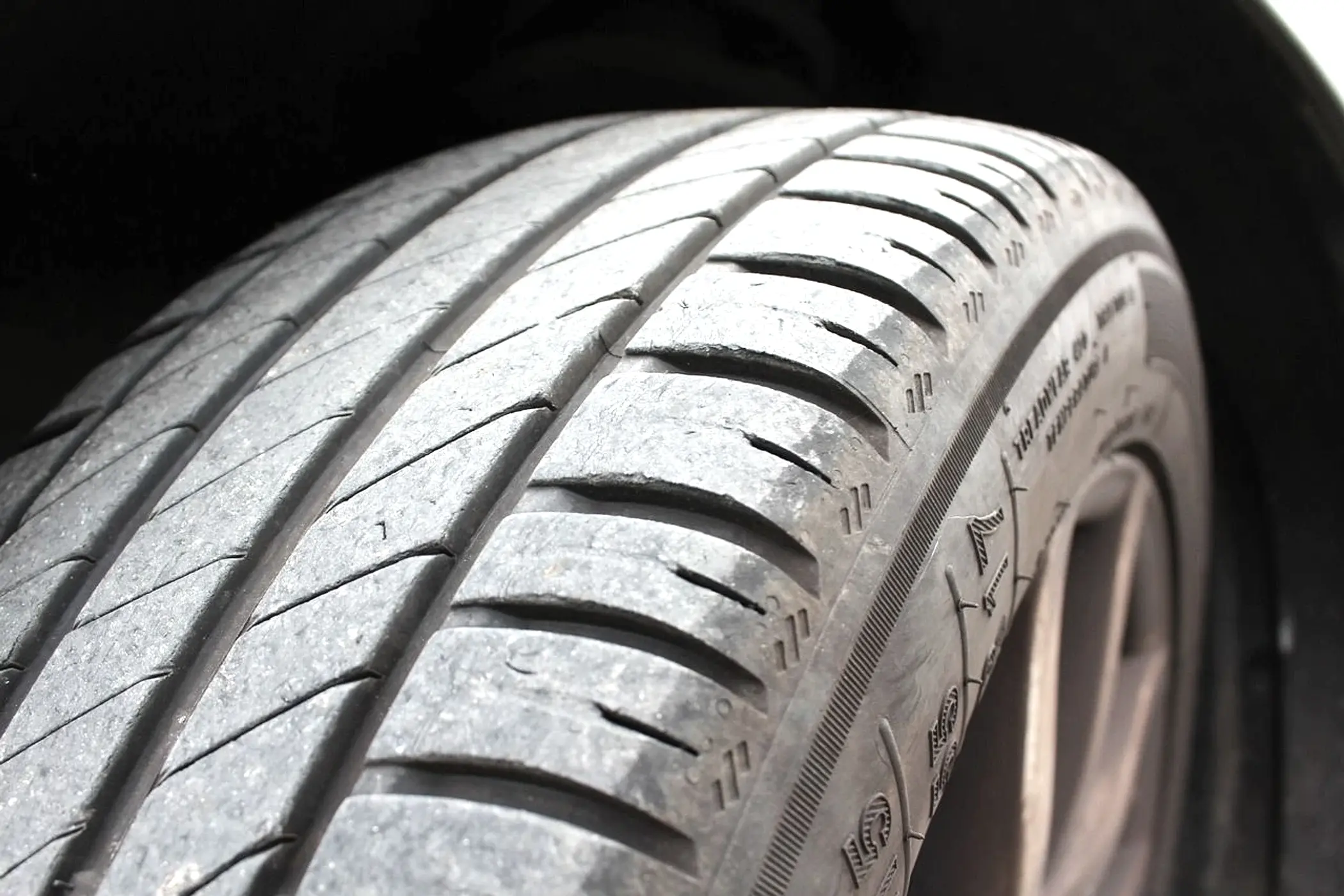
Wheel Balancing
If you feel a vibration through the steering wheel, the seat or the floor that appears at a particular speed and fades again, the wheels are almost certainly out of balance.
Fluid Inspections
Every major system in your car runs on a fluid, and most of them fail quietly by degrading rather than by running out.
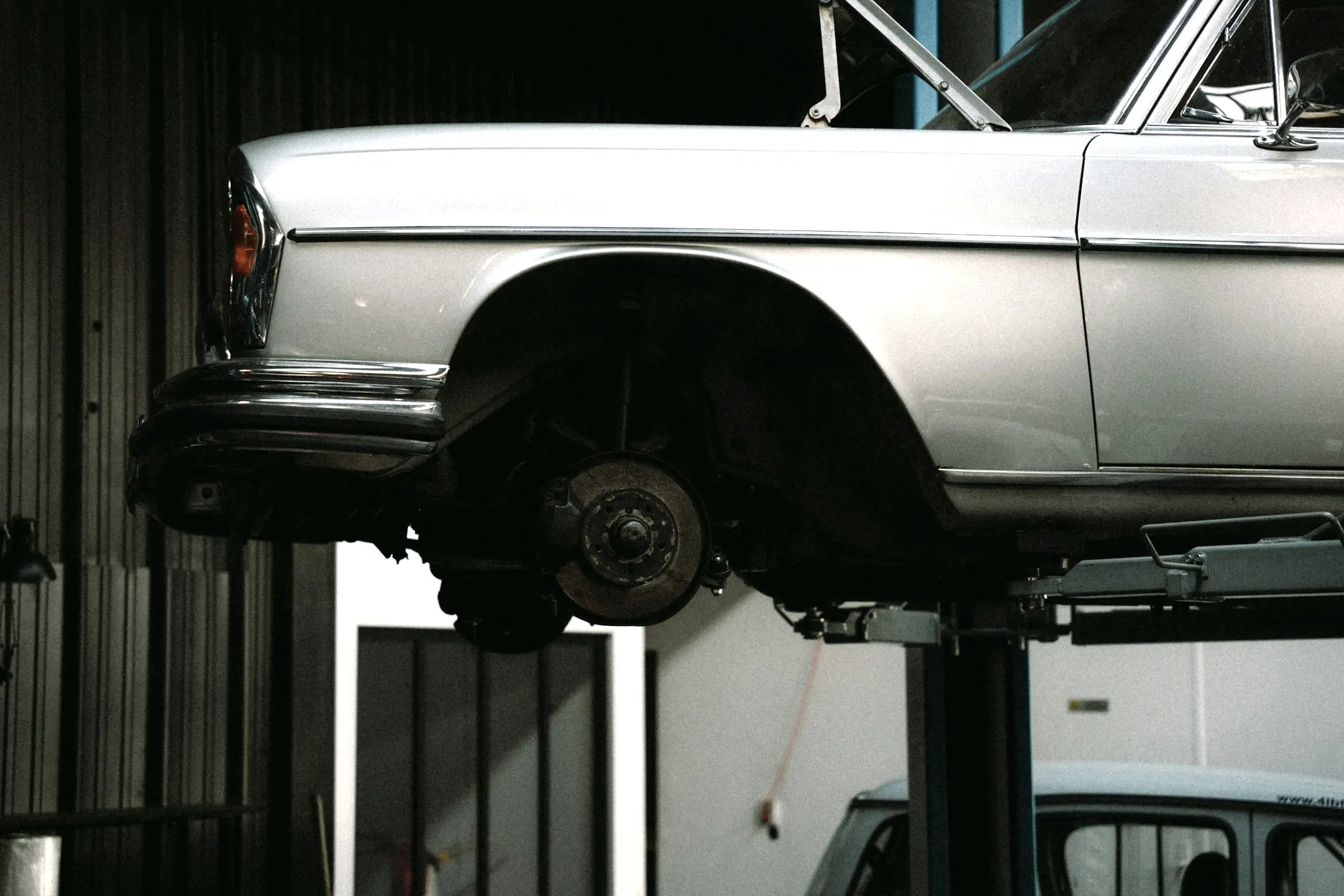
Suspension Services
Your suspension keeps the tires in contact with the road and absorbs what the road throws at the car, so when parts of it wear you lose ride quality, steering precision and grip together.
Vehicle Inspections
California does not require a periodic safety inspection, so a voluntary check is the only thing that catches brake, tire, steering and suspension wear before it becomes a failure.
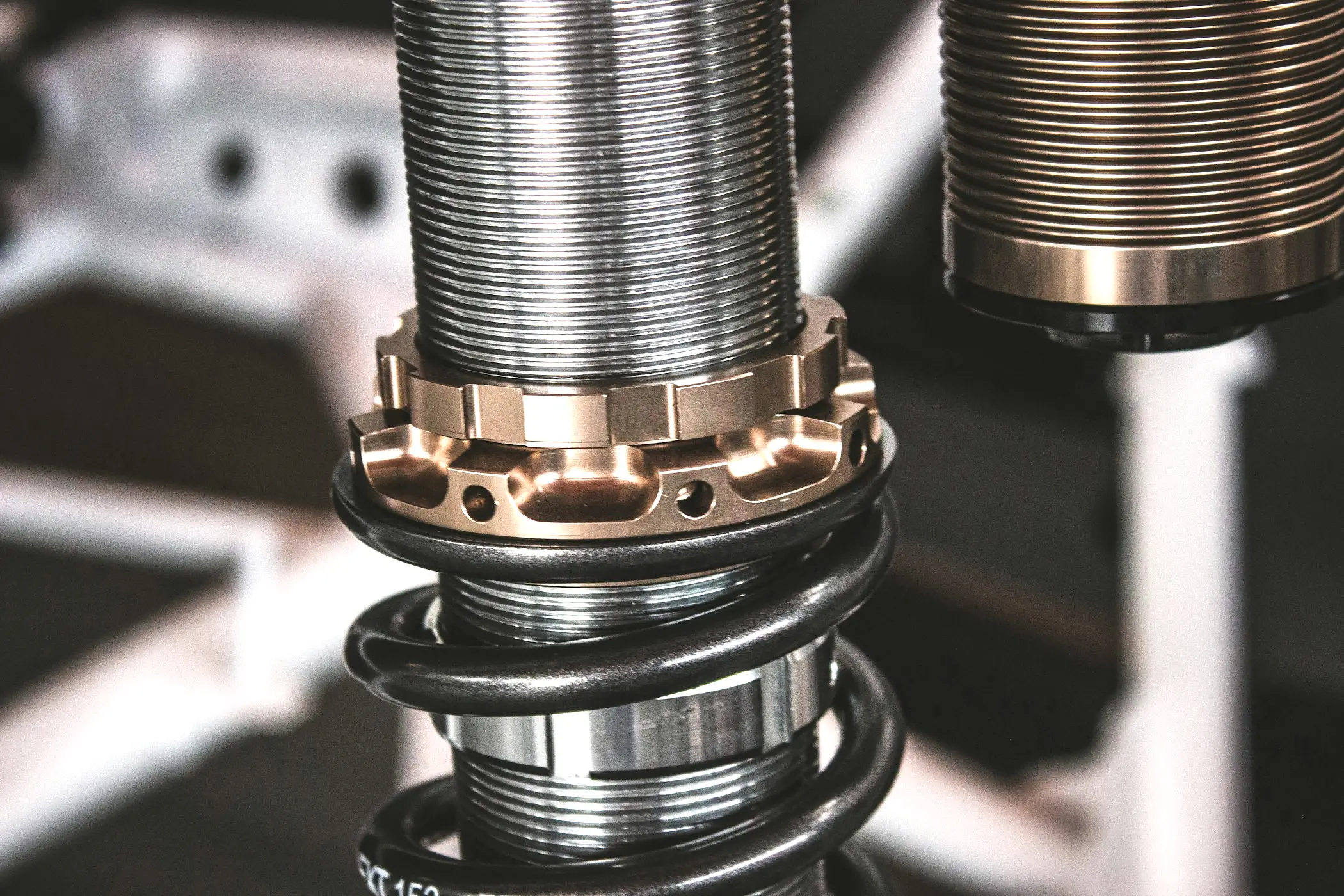
Shocks & Struts
Shocks and struts stop your springs from bouncing, and because they fade gradually rather than failing outright, most people do not realize how far gone theirs are until they drive a car with fresh ones.
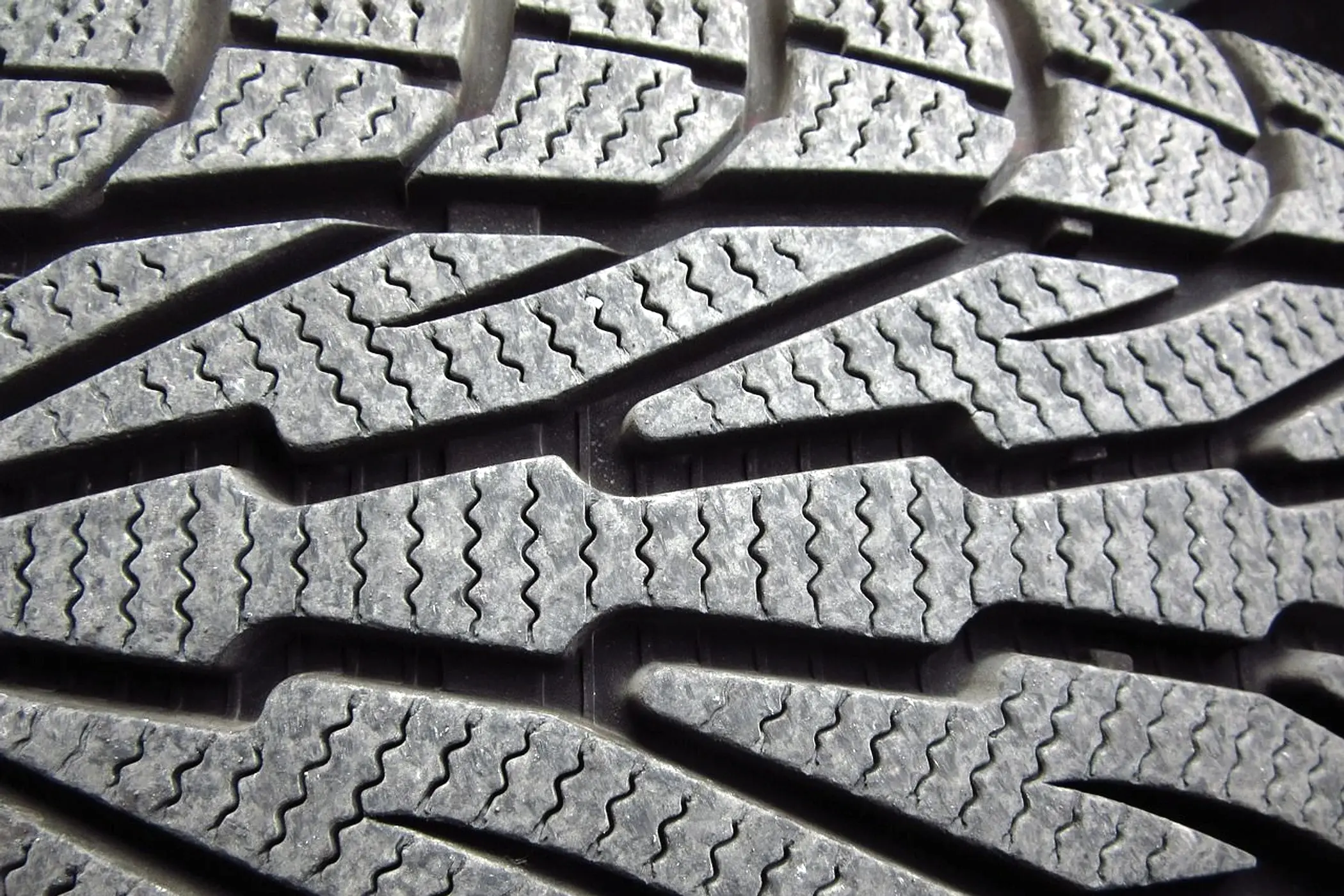
Tire Rotation
Tires wear at different rates depending on which corner they sit at, so moving them around at regular intervals is what makes a set wear evenly and last its full life.