
Suspension Repair in Redwood City: Clunks and Vague Steering
Your suspension keeps the tires in contact with the road and absorbs what the road throws at the car, so when parts of it wear you lose ride quality, steering precision and grip together. Five Points Tire handles suspension work including modifications and tuning as well as repair.
Suspension repair at Five Points Tire, in short
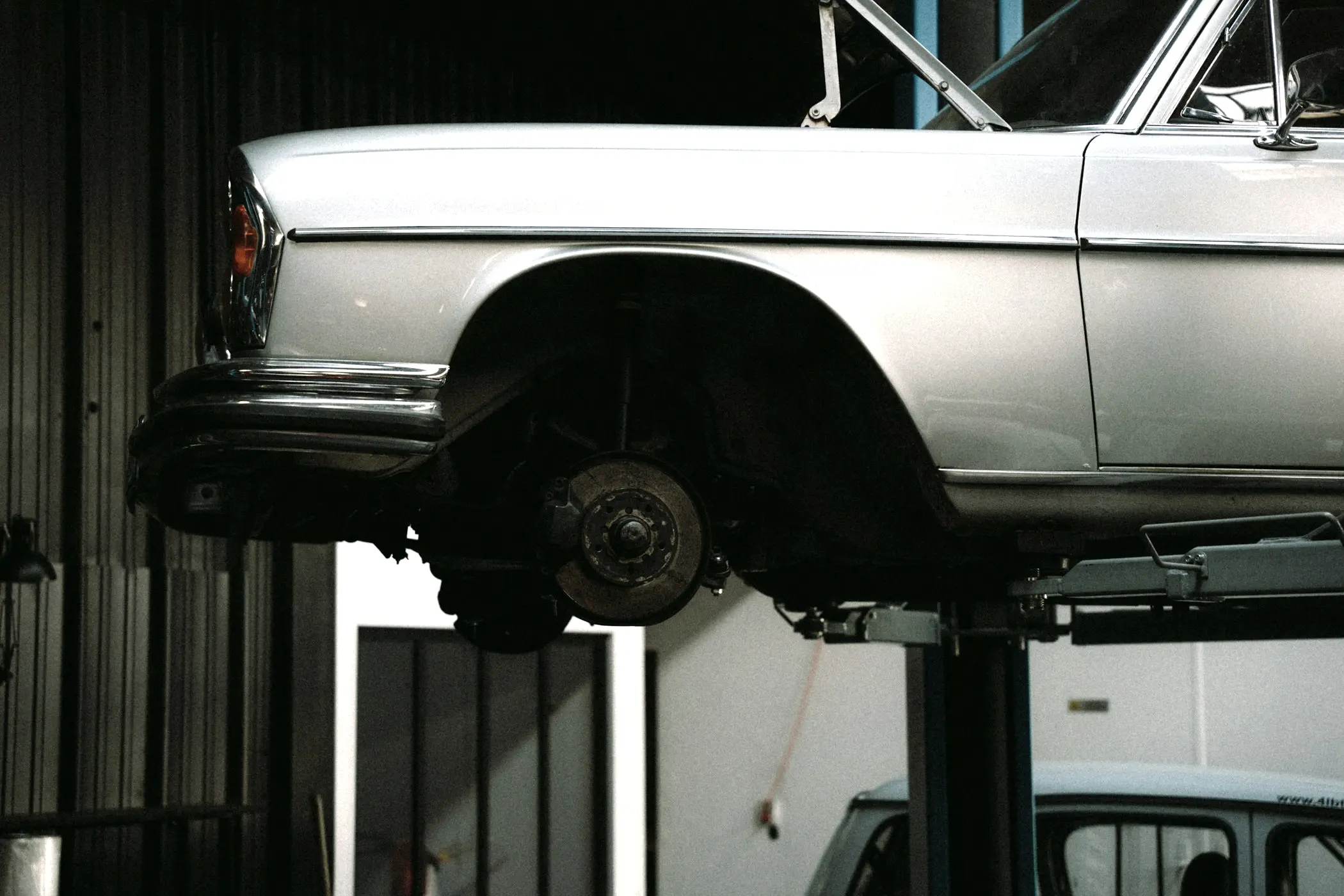
Five Points Tire handles suspension work in Redwood City including repair, modification and tuning. Clunks over bumps are often sway bar links, among the cheapest parts on the car, but they can also be ball joints, which are the ones to take seriously. Worn components let alignment angles move under load, which is why they get replaced before an alignment.
Suspension complaints almost always arrive as a noise, and the noise is genuinely useful information.
The parts involved range from about the cheapest thing on the car to among the most safety-critical, and they make different sounds. Working out which you've got before you book anything is worth doing.
What the suspension system is made of
Your suspension is a set of joints and bushings whose job is to let the wheel move up and down while holding it at precisely the right angle.
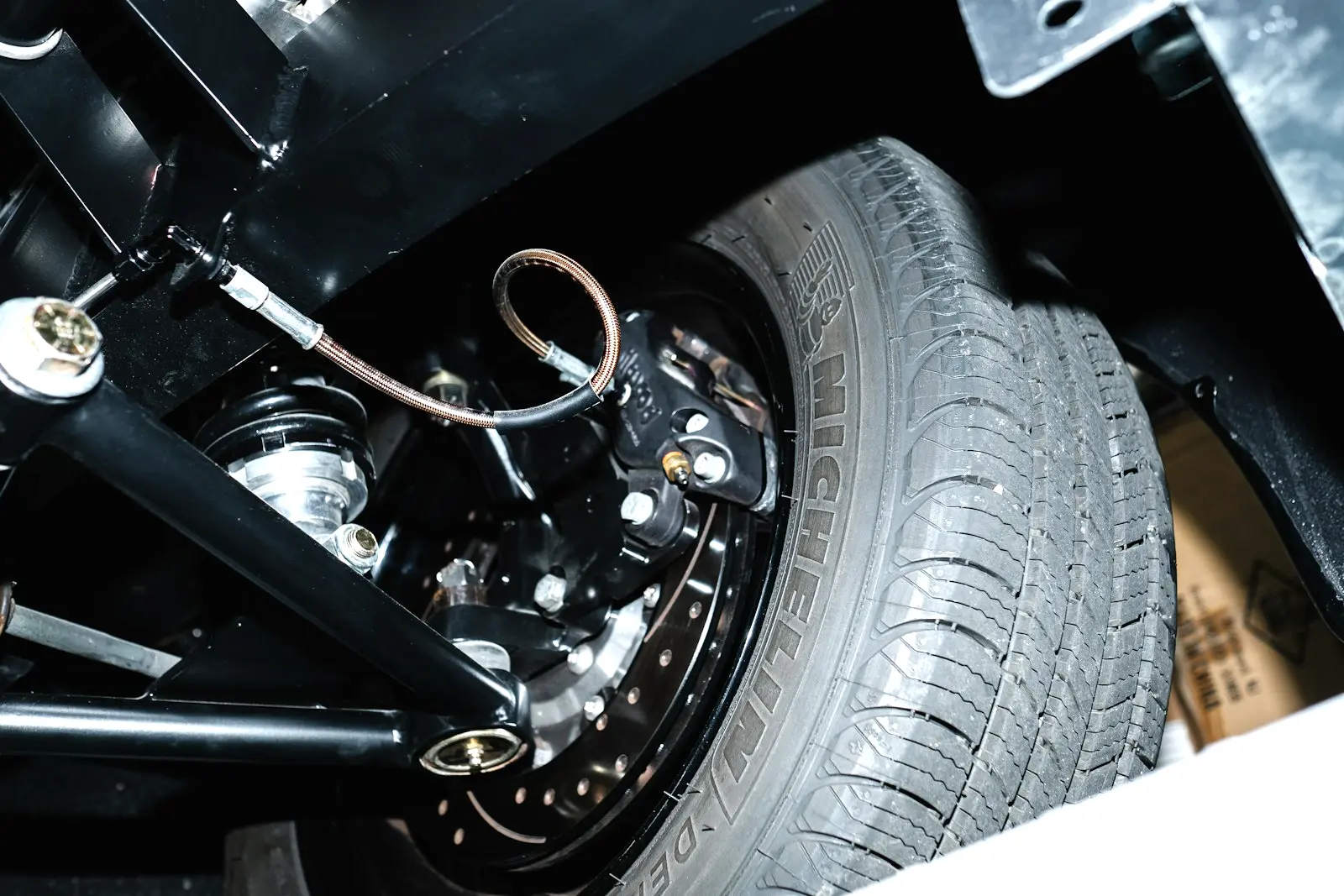
Control arms locate the wheel. Ball joints and bushings let those arms pivot. Springs carry the weight, dampers control the springs, and sway bars limit body roll.
When any one of them develops play, everything downstream is affected. That's why a single worn bushing can make a car feel generally vague rather than producing one specific symptom.
Roughly in order of how often they wear out:
- Sway bar links: Small rods connecting the sway bar to the suspension. Cheap, and the most common clunk.
- Bushings: Rubber sleeves at every pivot. They perish with age and heat, not just mileage.
- Ball joints: The pivot between the control arm and the hub. The safety-critical one.
- Control arm bushings: Let the arm move under load, which is what pulls alignment out.
- Strut mounts: The bearing the strut turns on. Produces a knock or a groan when you turn.
- Springs: They do break, and the corner sits low when they do.
Worn parts undo an alignment. Alignment sets the angles, but a worn bushing or ball joint lets those angles move under load. That is why a car can pull or wear tires unevenly again shortly after being aligned, and why worn parts get replaced before the alignment rather than after.
Signs you need suspension repair
- Clunks or knocks over bumps, or when turning into a driveway
- The steering feels loose, vague, or wanders on the freeway
- The car sits lower at one corner than the others
- Uneven or cupped tire wear
- A creak or groan at low speed over uneven surfaces
- The ride has become harsh, crashy, or noticeably noisier
- The car pulls or drifts even after an alignment
What that noise over bumps usually is
| What you notice | What it usually means | How urgent |
|---|---|---|
| Clunk over bumps, worst at low speed | Sway bar links, often the cheapest part on the car | Book it in |
| Clunk with vague steering | Worn ball joints | Urgent |
| Creak or groan over uneven ground | Perished rubber bushings | Book it in |
| Knock turning into a driveway | Top mounts or worn joints | Soon |
| One corner sitting lower | Broken spring or collapsed mount | Soon |
| Pulls or wears tires again after an alignment | Worn component letting the angles move | Soon |
The cost varies enormously between these, which is why it is worth identifying which.
What our team does for suspension repair
- 01Carry out suspension repair
- 02Handle suspension modifications and suspension tuning
Reading a suspension noise
Different failures make characteristically different sounds, and the cost varies enormously between them.
That's the reason to identify it rather than assume the worst.
| Noise | When | Usually | Cost |
|---|---|---|---|
| Rattle or clunk | Over small bumps, low speed | Sway bar links | Among the cheapest parts |
| Heavy clunk | Over larger bumps | Ball joints or control arm bushings | Moderate |
| Creak or groan | Slow, over uneven ground | Perished bushings | Moderate |
| Knock when turning | Turning into a driveway | Strut mounts | Moderate |
| Squeak | Bouncing the car at a standstill | Dry bushings | Often minor |
| Bang | Hard bumps only | Bump stops or a broken spring | Varies |
A clunk is not one diagnosis. The cheapest and the dearest cause sound similar from the driver's seat.
Why worn suspension parts undo an alignment
Worn suspension parts get replaced first, and the alignment happens after. Doing it the other way round means paying for the alignment twice.
An alignment sets the angles with the car at rest on the rack. A worn bushing or ball joint lets those angles move as soon as the car is loaded, cornering or braking.
So you can align a car with worn suspension, and it will read perfectly on the printout, and it will pull and wear tires again within weeks.
Want it checked? Describe what the car is doing and Five Points Tire will tell you whether it needs suspension repair or something else. Call 650-365-0280, or send the form and someone calls you back. Request an appointment
Ball joints deserve more caution than the rest
Most suspension wear is a comfort and tire-wear problem. Ball joints are different.
A ball joint is what connects the control arm to the wheel hub. If one separates completely, the wheel is no longer held to the car.
That's rare, and it does give warning first: clunking over bumps, vague steering, and sometimes uneven tire wear.
It's the one item on this page where a clunk shouldn't be filed under investigate eventually.
A corner sitting lower than the others
Park on level ground and look at the gap between each tire and the arch above it.
A noticeably smaller gap on one corner usually means a broken spring or a collapsed mount.
It's worth checking because ride height sets your alignment geometry. One low corner means that wheel is running at angles it was never designed for, and the tire will show it.
Common suspension mistakes to avoid
- Aligning before replacing worn parts. The angles won't hold under load, and you'll pay for the alignment twice.
- Assuming a clunk means the expensive thing. Sway bar links are among the cheapest parts on the car and the most common cause.
- Ignoring clunking with vague steering together. That combination points at ball joints, which is the one worth acting on quickly.
- Replacing dampers and expecting the clunk to go. Dampers cause float and cupped tires. They don't usually cause clunks.
- Only looking at one corner. Bushings perish by age, so if one is gone the others are the same age.
The bottom line
Note when the noise happens: small bumps or large, turning or straight, slow or fast. That's most of the diagnosis and it costs you nothing.
If it clunks and the steering also feels vague, move it up the list. That pairing points at ball joints.
And if you're booking an alignment because the car pulls, have the suspension checked first, or the alignment won't hold.
Suspension work overlaps with almost everything underneath the car. Worn shocks and struts are the usual starting point, a wandering car needs a wheel alignment, heavy steering can be the power steering, and ride height changes everything if there is a lift kit involved.
Call Five Points Tire on 650-365-0280 and describe the noise and when it happens. Suspension faults get diagnosed by where and when, not by the part someone guessed at.
Suspension repair questions we get asked
Question not on the list? Ask us directly.
What are the signs of worn suspension?
- Clunks over bumps, vague or wandering steering, uneven or cupped tire wear, a corner sitting low, creaking over uneven ground, and a ride that has become harsher or noisier. Any of them is worth having inspected.
What causes a clunking noise over bumps?
- Most often sway bar links, which are among the cheapest suspension parts on the car. Worn ball joints, perished bushings and failed strut mounts also produce it. Since the cost varies enormously, it is worth identifying which before assuming.
Can worn suspension cause uneven tire wear?
- Yes, and it is one of the main causes. Worn components let the wheel move out of its set angles under load, so the tire scrubs. It is also why an alignment alone will not solve it while the worn part is still there.
Is it worth aligning a car with worn suspension?
- Generally not until the worn parts are replaced. Alignment sets angles that a worn joint or bushing will let move again as soon as the car is loaded, so the alignment does not hold. Five Points Tire will tell you honestly if an alignment is worth doing yet, or whether the worn parts should come first.
Related services
Shocks & Struts
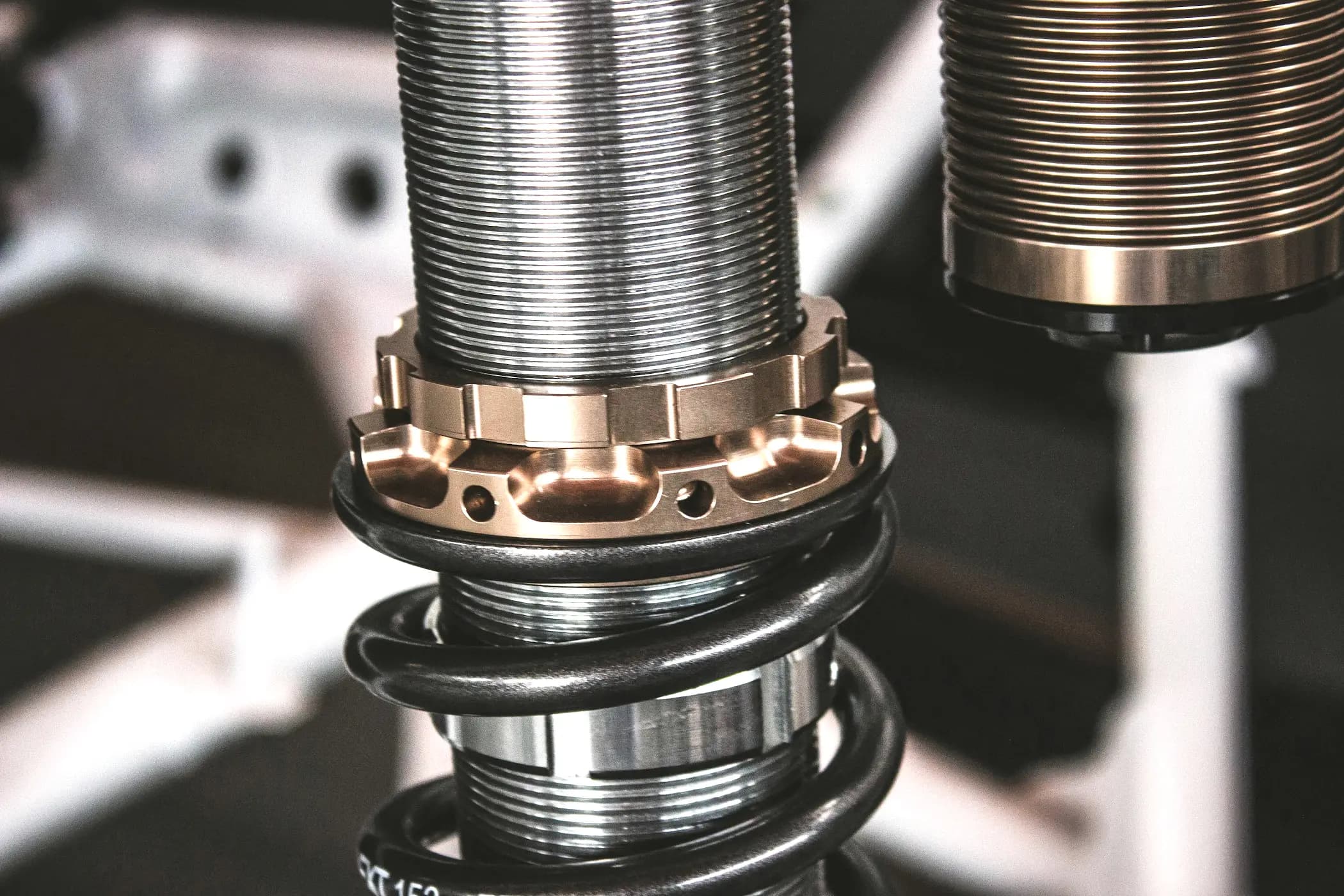
Shocks and struts stop your springs from bouncing, and because they fade gradually rather than failing outright, most people do not realize how far gone theirs are until they drive a car with fresh ones.
Wheel Alignment
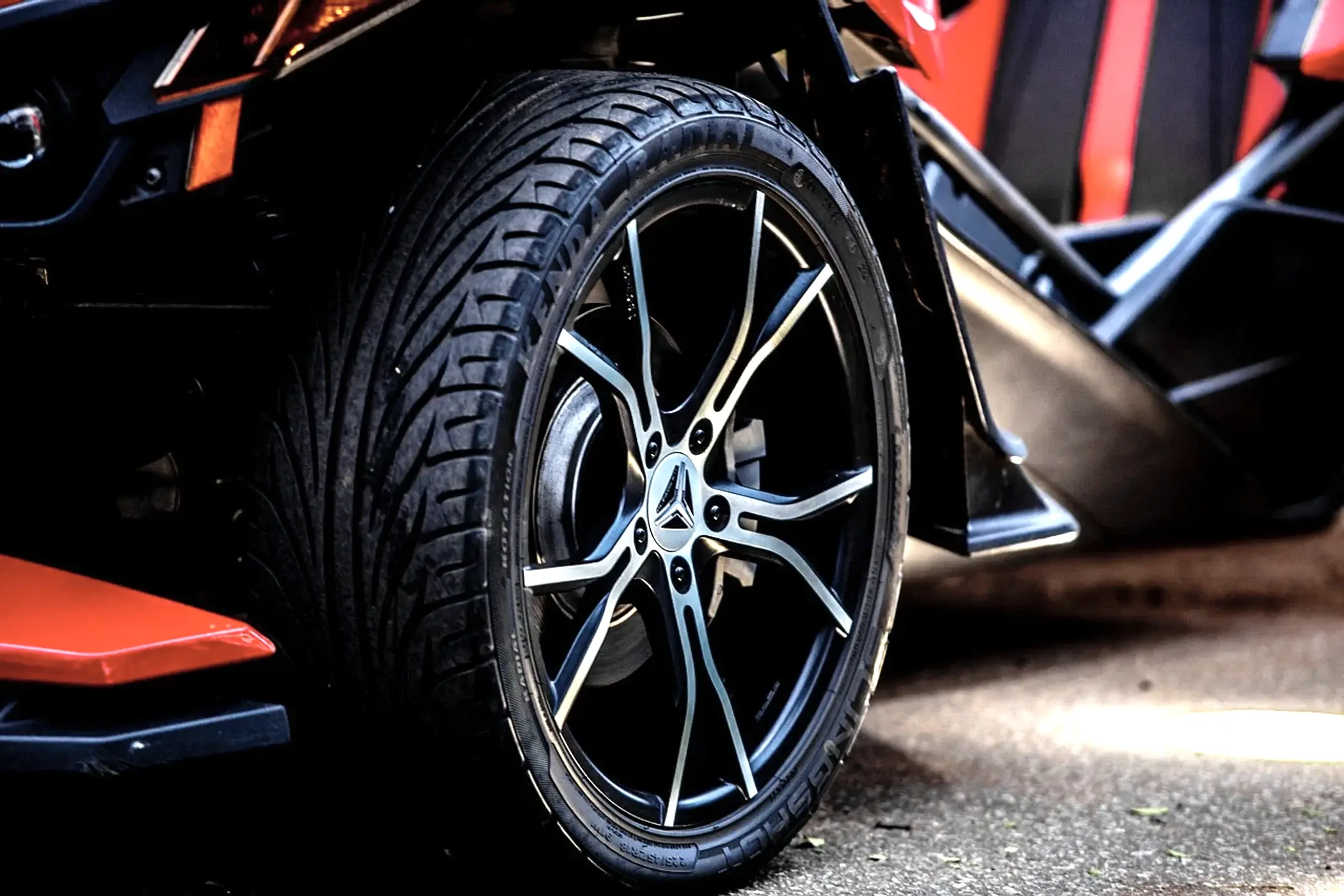
If your car pulls to one side, the steering wheel sits off center when you are going straight, or your tires are wearing on one edge, the alignment is out.

Power Steering
If your steering has gone heavy, groans when you turn, or feels inconsistent from one moment to the next, the power steering system needs looking at rather than tolerating.

Lift Kits
A lift kit raises your truck or SUV to fit larger tires and gain ground clearance, and it changes the suspension geometry in the process, so it has to be aligned afterwards.
Wheel Balancing
If you feel a vibration through the steering wheel, the seat or the floor that appears at a particular speed and fades again, the wheels are almost certainly out of balance.
Tire Rotation
Tires wear at different rates depending on which corner they sit at, so moving them around at regular intervals is what makes a set wear evenly and last its full life.