Shock and Strut Replacement in Redwood City: The Bounce Test
Shocks and struts stop your springs from bouncing, and because they fade gradually rather than failing outright, most people do not realize how far gone theirs are until they drive a car with fresh ones. Five Points Tire repairs and replaces shocks and struts and sets the suspension up so the ride settles down again.
Shock and strut replacement at Five Points Tire, in short
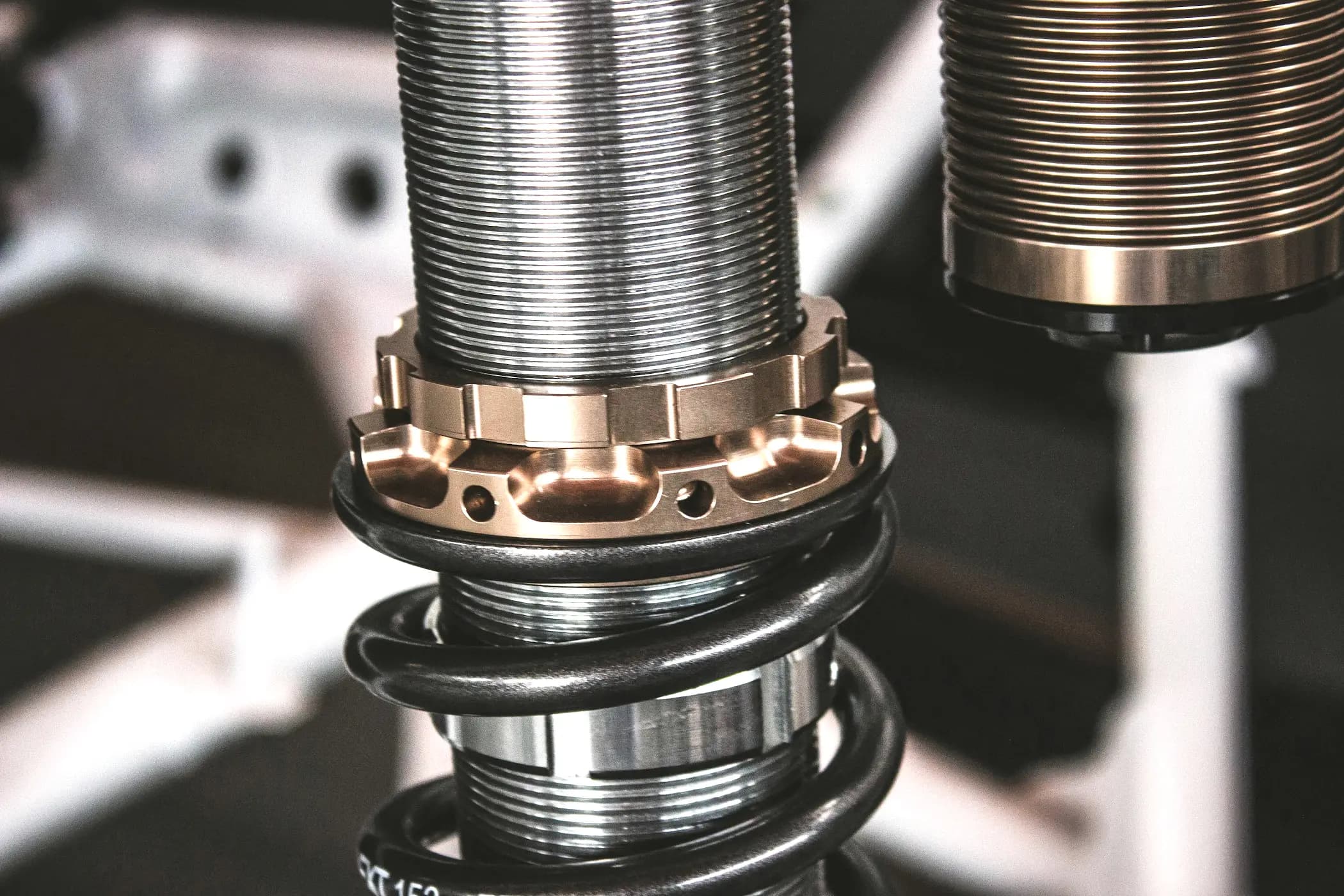
Five Points Tire replaces and repairs shocks and struts in Redwood City and sets the suspension up so the ride settles down again. Dampers fade gradually rather than failing outright, so most people do not realize how far gone theirs are until they drive a car with fresh ones. Worn dampers measurably lengthen braking distances.
Worn shocks are the most common suspension fault nobody reports, because they never fail. They fade.
Over 60,000 miles the car gets slightly floatier, dives a little more under braking, and takes a little longer to settle. You adapt to every bit of it.
Most people don't find out until they drive the same model with fresh dampers and wonder what's different.
What a damper actually does
A spring holds the car up. A shock absorber controls the spring.
Without damping, a spring that gets compressed by a bump keeps oscillating. The wheel bounces, and each bounce is a moment when the tire isn't fully pressing on the road.
The damper turns that oscillation into heat and kills it in one movement. That's the entire job, and it's why worn dampers feel floaty rather than broken.
This is a braking issue, not just a comfort one. A worn damper lets the tire skip and lose contact with the road over bumps, and a tire that is momentarily airborne is providing no braking and no steering. It measurably lengthens stopping distances.
Signs you need new shocks and struts
- The car keeps bouncing after a bump instead of settling in one movement
- The nose dives noticeably under braking, or the tail squats on acceleration
- Excessive body roll through corners
- Cupped or scalloped wear in patches around the tire tread
- A clunk over bumps
- Visible oil on the body of the shock or strut
- The car feels floaty or unsettled on the freeway
The bounce test, and what else to look for
| Check | Healthy | Worn |
|---|---|---|
| Push a corner down hard and release | Settles in about one movement | Keeps bouncing |
| Braking | Nose stays reasonably level | Pronounced nose dive |
| Cornering | Body roll controlled | Wallows, feels floaty |
| Tire tread | Even wear | Cupped or scalloped patches |
| Damper body | Dry | Oil film or visible wetness |
| Over bumps | Quiet | Clunk from the top mount |
Ten seconds per corner, and it is the check most people never do.
What our team does for shock and strut replacement
- 01Replace or repair shocks and struts
- 02Set the suspension up properly so the ride is quieter and smoother afterwards
The bounce test takes ten seconds
Push down hard on one corner of the car, let go suddenly, and count the bounces. One rise-and-settle is healthy. Two or more means that corner's damper is worn.
- Push down hard on one corner of the car: Use your weight, over the wheel, not the bodywork edge.
- Let go suddenly: Don't ease off.
- Watch how it comes back: It should rise and settle in about one movement.
- Count the bounces: Two or more and that damper is worn.
- Do all four: They rarely wear evenly.
Shock or strut, and why it matters to the bill
A shock only damps. A strut damps and is also a structural part of the suspension, carrying the spring and locating the wheel. The words get used interchangeably, and the difference decides the bill.
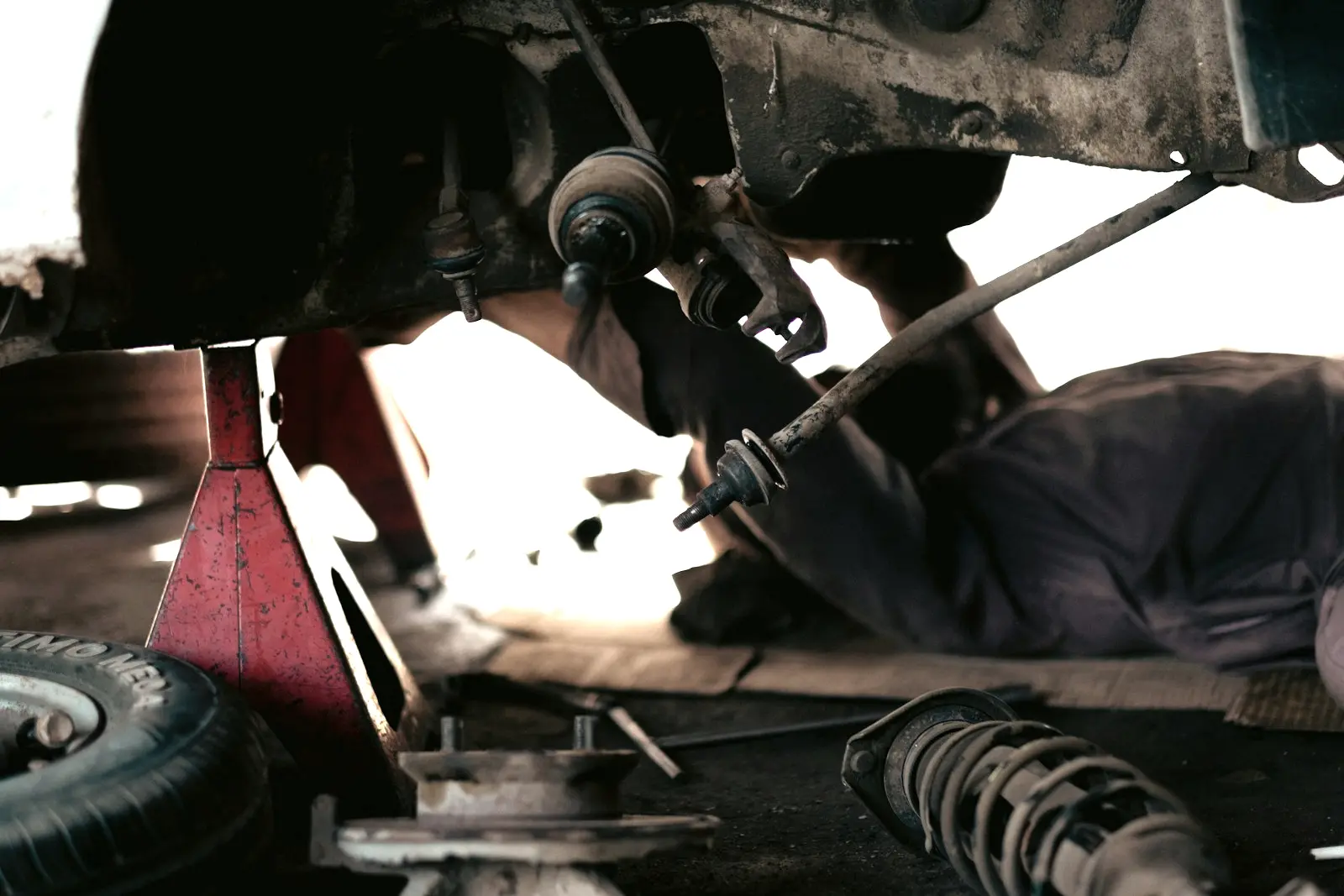
Replacing a strut changes where the wheel sits, so it needs an alignment afterwards. Replacing a plain shock generally doesn't.
Worth knowing before you're quoted, because an alignment on the strut job isn't padding.
| Shock | Strut | |
|---|---|---|
| Damps | Yes | Yes |
| Carries the spring | No | Yes |
| Locates the wheel | No | Yes |
| Alignment after replacing | Usually not | Usually yes |
| Typical position | Often rear | Often front |
Many cars run struts at the front and shocks at the rear.
Want it checked? Describe what the car is doing and Five Points Tire will tell you whether it needs new shocks and struts or something else. Call 650-365-0280, or send the form and someone calls you back. Request an appointment
Worn shocks lengthen your stopping distance
A worn damper lets the tire skip over bumps instead of following them, and a tire that's momentarily airborne is providing no braking and no steering.
On a smooth road you'd never notice. On a bumpy road, in an emergency stop, it measurably lengthens your stopping distance.
That's the case for replacing them on condition rather than waiting for something to break, because nothing is going to break.
Cupped tire wear is the visible clue
If you see or feel scalloped patches spaced evenly around the tread, that's a damper symptom.
The wheel is bouncing very slightly at speed and scrubbing tread off wherever it lands, which produces that repeating pattern.
It's worth catching because it works both ways: worn dampers cup the tire, and a cupped tire then causes vibration of its own that new dampers alone won't cure.
Common shock and strut mistakes to avoid
- Waiting for something to break. Dampers fade rather than fail. There's no event to wait for.
- Replacing one corner. Fresh on one side and worn on the other makes the car behave unevenly under braking. Do them in pairs.
- Skipping the alignment after struts. A strut locates the wheel. Replacing one moves your alignment angles.
- Blaming the tires for a cupped wear pattern. The tire is the symptom. The damper is the cause.
- Assuming it's only about comfort. A skipping tire isn't braking or steering. It's a stopping-distance issue.
The bottom line
Do the bounce test on all four corners. It takes under a minute and it's the clearest signal you'll get.
If the car keeps bouncing, or dives hard under braking, or you can feel scalloping across the tread, the dampers are done.
Replace in pairs, and budget the alignment if they're struts rather than shocks.
Dampers are one part of how the car sits and steers. Wheel balancing removes the vibration they cannot, and if the vehicle is running a lift kit the geometry has already changed.
Call Five Points Tire on 650-365-0280. Bring it in and we'll look at the tires at the same time, because worn dampers show up in the tread long before the ride gets bad.
Shock and strut replacement questions we get asked
Question not on the list? Ask us directly.
How do I know if my shocks are worn?
- Push down hard on one corner and release. It should settle in about one movement, and if it keeps bouncing the damper is worn. Nose dive under braking, body roll, cupped tire wear and a floaty feel on the freeway all point the same way.
What is the difference between a shock and a strut?
- A strut is a structural part of the suspension that carries the spring and locates the wheel, as well as damping. A shock only damps. Because a strut positions the wheel, replacing one usually affects alignment.
Do worn shocks affect braking?
- Yes, measurably. Worn dampers let the tire skip over bumps, and a tire out of contact with the road is not braking or steering. It is the safety argument for replacing them, not just the comfort one.
Do I need an alignment after replacing struts?
- Generally yes, because the strut locates the wheel and replacing it changes the alignment angles. Skipping it tends to show up as uneven tire wear shortly afterwards. Five Points Tire checks alignment angles after strut work, since replacing a strut moves the geometry whether you asked it to or not.
Related services
Suspension Services
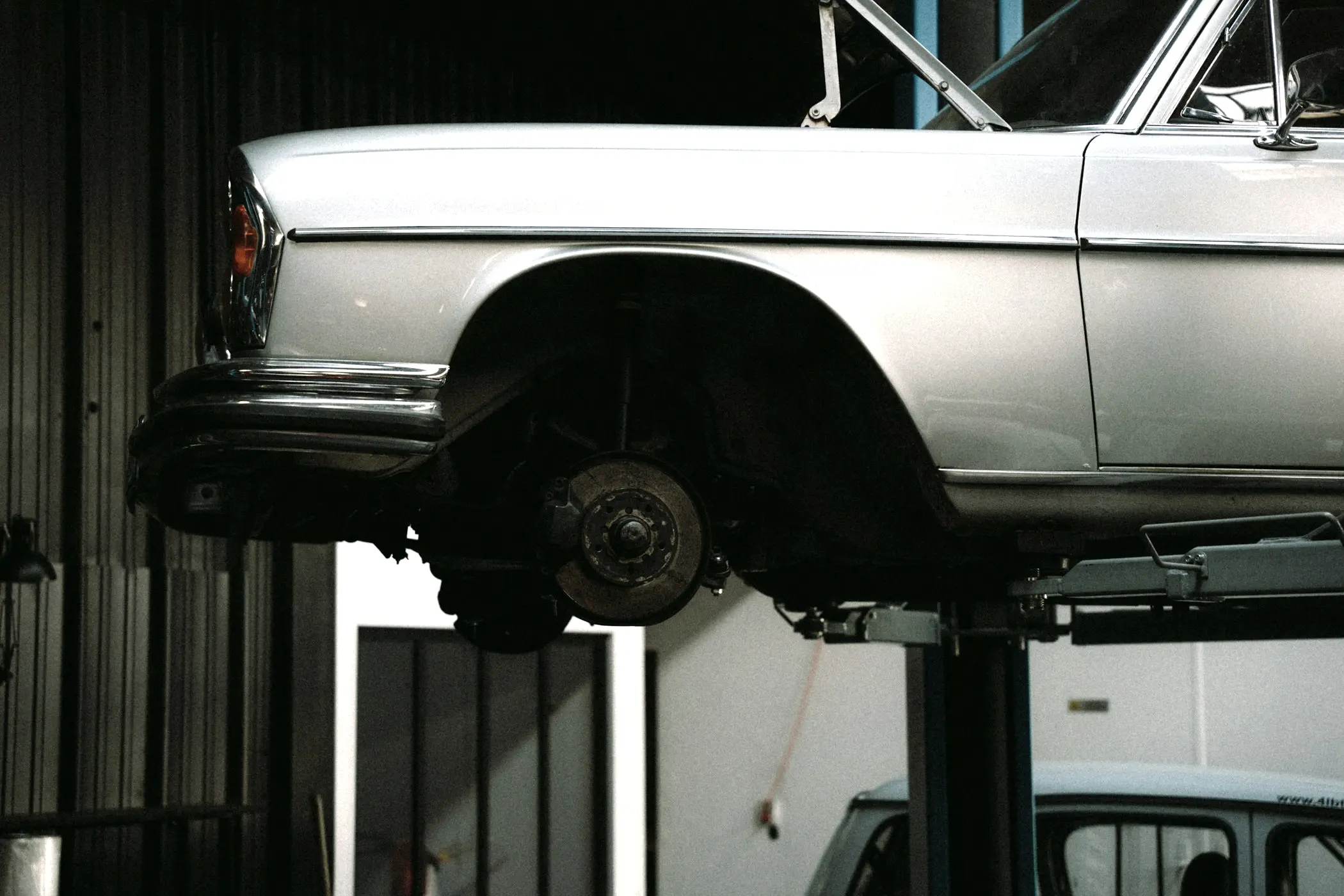
Your suspension keeps the tires in contact with the road and absorbs what the road throws at the car, so when parts of it wear you lose ride quality, steering precision and grip together.
Wheel Alignment
If your car pulls to one side, the steering wheel sits off center when you are going straight, or your tires are wearing on one edge, the alignment is out.
Wheel Balancing
If you feel a vibration through the steering wheel, the seat or the floor that appears at a particular speed and fades again, the wheels are almost certainly out of balance.

Lift Kits
A lift kit raises your truck or SUV to fit larger tires and gain ground clearance, and it changes the suspension geometry in the process, so it has to be aligned afterwards.
Tire Rotation
Tires wear at different rates depending on which corner they sit at, so moving them around at regular intervals is what makes a set wear evenly and last its full life.

Power Steering
If your steering has gone heavy, groans when you turn, or feels inconsistent from one moment to the next, the power steering system needs looking at rather than tolerating.