Timing Belt Replacement in Redwood City: Why the Schedule Is Everything
The timing belt keeps your engine's valves and pistons moving in step, and on an interference engine a snapped belt lets them collide, which can destroy the engine. Five Points Tire inspects the whole timing system, including the cover, pulley, belt tension and timing marks, so wear is found before failure.
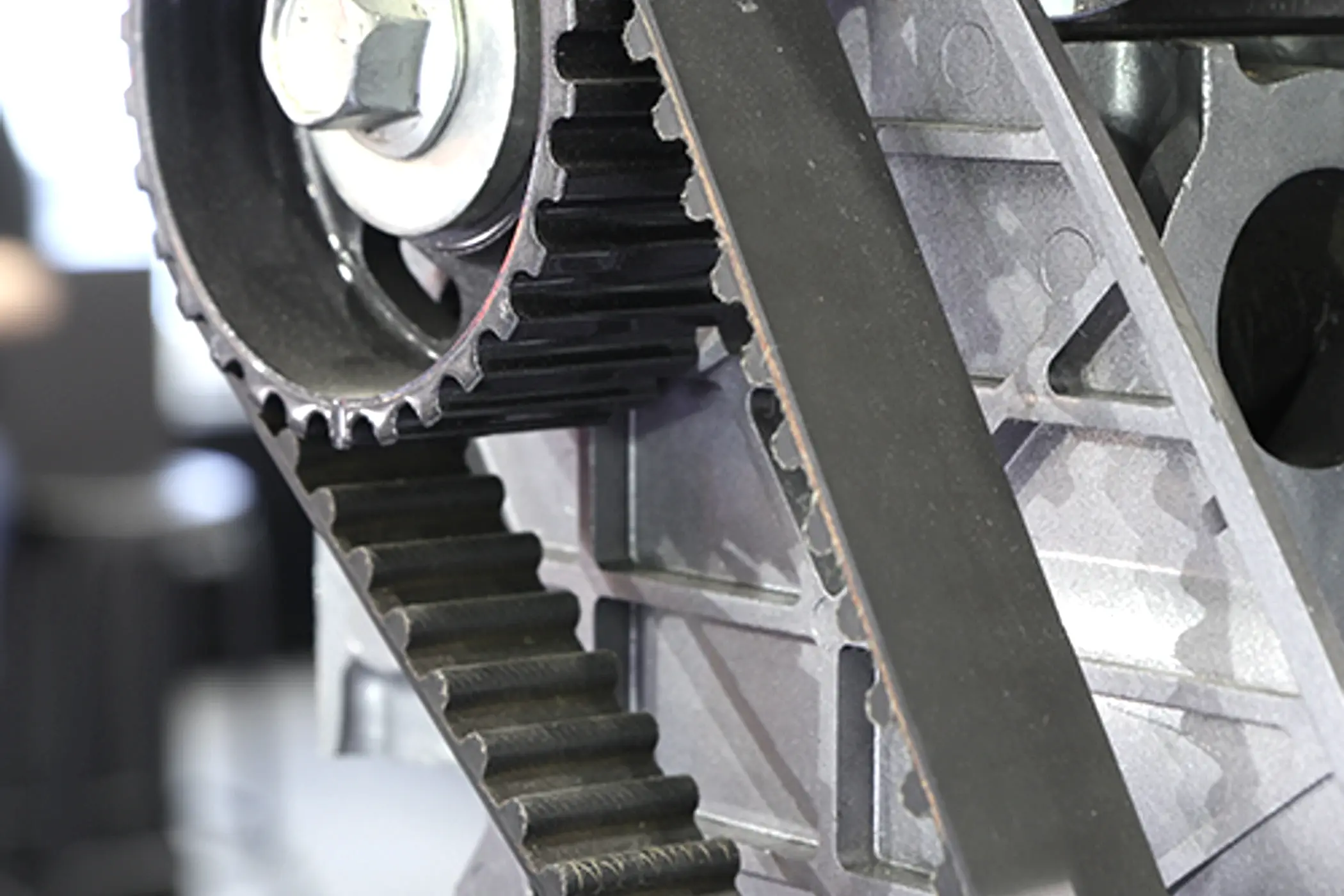
Timing belt replacement at Five Points Tire, in short
Five Points Tire inspects timing systems in Redwood City, including the cover, the pulley, belt tension and the timing marks. This is the one maintenance item where the schedule is the whole story, because a belt does not warn you and on an interference engine a snapped belt lets the valves and pistons meet. Tell us the year, make and model and we will tell you whether you have a belt or a chain.
Almost every maintenance item on a car gives you warning. This one doesn't.
A timing belt runs perfectly right up until it snaps, and on most modern engines that single event does serious internal damage.
Which is why it's the one job where the schedule genuinely is the whole story, and why inspecting it isn't a substitute for replacing it.
Why the schedule is the whole story
The timing belt keeps your valves and pistons moving in step. They share the same space in the cylinder, at different moments.
On an interference engine, which covers most modern engines, that timing is the only thing keeping them apart. When the belt breaks, the pistons keep moving and the valves stop, and they meet.
Bent valves are the best case. A damaged head or piston is the worse one.
That's why it's replaced on an interval rather than on condition. A belt that looks perfect can be one week from failing, and there's no inspection that reliably tells you which week.
This is the one item where the schedule is the whole story. A timing belt does not warn you. It runs fine, then it snaps. On an interference engine, which is most modern engines, bent valves are the best case. It is replaced on an interval precisely because condition tells you nothing.
Signs you need a new timing belt
- You have reached the mileage or age interval in your handbook
- A ticking or slapping noise from the front of the engine
- The engine will not start and turns over unusually freely
- Rough running or misfires that arrived suddenly
- Oil leaking from around the timing cover
- You bought the car used and cannot prove the belt has been done
Timing belt or timing chain: a quick reference
| Timing belt | Timing chain | |
|---|---|---|
| Material | Reinforced rubber | Metal |
| Scheduled replacement | Yes, commonly 60,000 to 100,000 miles | Designed to last the engine's life |
| Fails by | Snapping, usually with no warning | Stretching, tensioner wear, rattling first |
| Consequence on an interference engine | Valves and pistons collide | Rarely catastrophic if caught |
| Replaced with | Tensioner, idlers, often the water pump | Guides and tensioner |
Which one you have decides the whole conversation. Tell us the year, make and model.
What our team does for timing belt replacement
- 01Inspect the entire timing system, including the timing belt cover and the belt pulley
- 02Check timing belt tension
- 03Check the timing belt marks for anything indicating an impending problem
Belt age counts as much as mileage
The interval usually has two numbers, and people only read the mileage one.
It's a rubber part. It perishes with heat cycling and time whether or not the car covers the miles, which means a low-mileage car can be well past due on age alone.
If you drive 4,000 miles a year, the mileage figure will never catch you. The time figure will.

Belt or chain? It changes everything
Not every engine has a belt. Many use a timing chain, and the difference is fundamental.
| Timing belt | Timing chain | |
|---|---|---|
| Material | Reinforced rubber | Metal |
| Scheduled replacement | Yes, commonly 60,000 to 100,000 miles | Designed to last the engine's life |
| Warning before failure | Usually none | Often rattles first, especially on cold start |
| Fails by | Snapping | Stretching, or tensioner wear |
| Replaced alongside | Tensioner, idlers, often the water pump | Guides and tensioner |
| Access | Behind the timing covers | Behind the timing cover |
Tell us the year, make and model and we can tell you which you have. It is not guessable from the outside.
Want it checked? Describe what the car is doing and Five Points Tire will tell you whether it needs a new timing belt or something else. Call 650-365-0280, or send the form and someone calls you back. Request an appointment
Buying a used car with no belt history
If you bought the car used and can't prove the belt has been done within its interval, assume it hasn't.
There's no way to tell by looking, and a seller saying they think it was done isn't evidence. Receipts are evidence.
It's one of very few jobs worth doing on suspicion rather than waiting for confirmation, because the downside of being wrong is the engine.
Do the water pump at the same time. On many engines the same belt drives it and it sits behind the same covers. Nearly all the cost is the labour to get in there, so doing both at once is considerably cheaper than doing them separately.
Do the water pump at the same time
On a lot of engines the timing belt also drives the water pump, and both sit behind the same covers.
Nearly all the cost of that job is the labor to get in there. The pump itself is a fraction of it.
So replacing the pump while everything is already apart costs very little extra. Replacing it a year later means paying the entire access cost again.
Same logic applies to the tensioner and idler pulleys, which is why they're normally quoted as a kit rather than individually.
What normally gets replaced together:
- The timing belt itself: The scheduled item.
- Tensioner: It holds belt tension. A failing one destroys a new belt.
- Idler pulleys: Bearings wear, and they're behind the same covers.
- Water pump: Where the timing belt drives it.
- Seals: Crank and cam seals are accessible only now.
- Coolant: It comes out for the pump anyway.
Common timing belt mistakes to avoid
- Reading the mileage figure and ignoring the time figure. A low-mileage car ages out of its interval without ever reaching the miles.
- Assuming an inspection is enough. A belt that looks perfect can be a week from failing. There's no reliable visual test.
- Trusting a seller's word on a used car. Receipts are evidence. Recollection isn't, and the downside is your engine.
- Doing the belt without the water pump. The labor to get in there is nearly the whole cost, and you'll pay it twice.
- Assuming you have a belt at all. Plenty of engines use a chain and have no scheduled replacement. Find out which you have.
The bottom line
First, find out whether you have a belt or a chain. It's not guessable and it changes everything.
If it's a belt, check both numbers in your handbook, mileage and years, and treat whichever comes first as the deadline.
If you bought the car used with no receipts, assume it's due.
The belt is rarely replaced on its own. The water pump is often driven by it and gets done at the same time, the serpentine belt is a different belt doing a different job, and both sit on a maintenance schedule with the rest of the belts and hoses.
Tell Five Points Tire the year, make and model on 650-365-0280 and we'll tell you whether you have a belt or a chain, and what the interval actually is for your engine.
Timing belt replacement questions we get asked
Question not on the list? Ask us directly.
When should a timing belt be replaced?
- At the interval in your handbook, which is commonly somewhere between 60,000 and 100,000 miles and usually has a time limit alongside it. Both matter, because the belt ages whether or not the car is driven.
What happens if the timing belt breaks?
- The engine stops immediately. On an interference engine, which covers most modern engines, the valves and pistons then collide and you are looking at serious internal damage. It is the failure that most justifies preventative replacement.
Does my car have a timing belt or a timing chain?
- It depends on the engine. Chains are designed to last the life of the engine and are not a scheduled replacement, belts have a defined interval. Tell us the year, make and model and we can tell you which you have.
Should the water pump be replaced with the timing belt?
- It is usually recommended, because on many engines the same belt drives it and it sits behind the same covers. Nearly all the cost is the labour to get there, so doing both at once is significantly cheaper than doing them separately. Five Points Tire will tell you what your specific engine needs, because on some the pump comes out anyway and on others it does not.
Related services
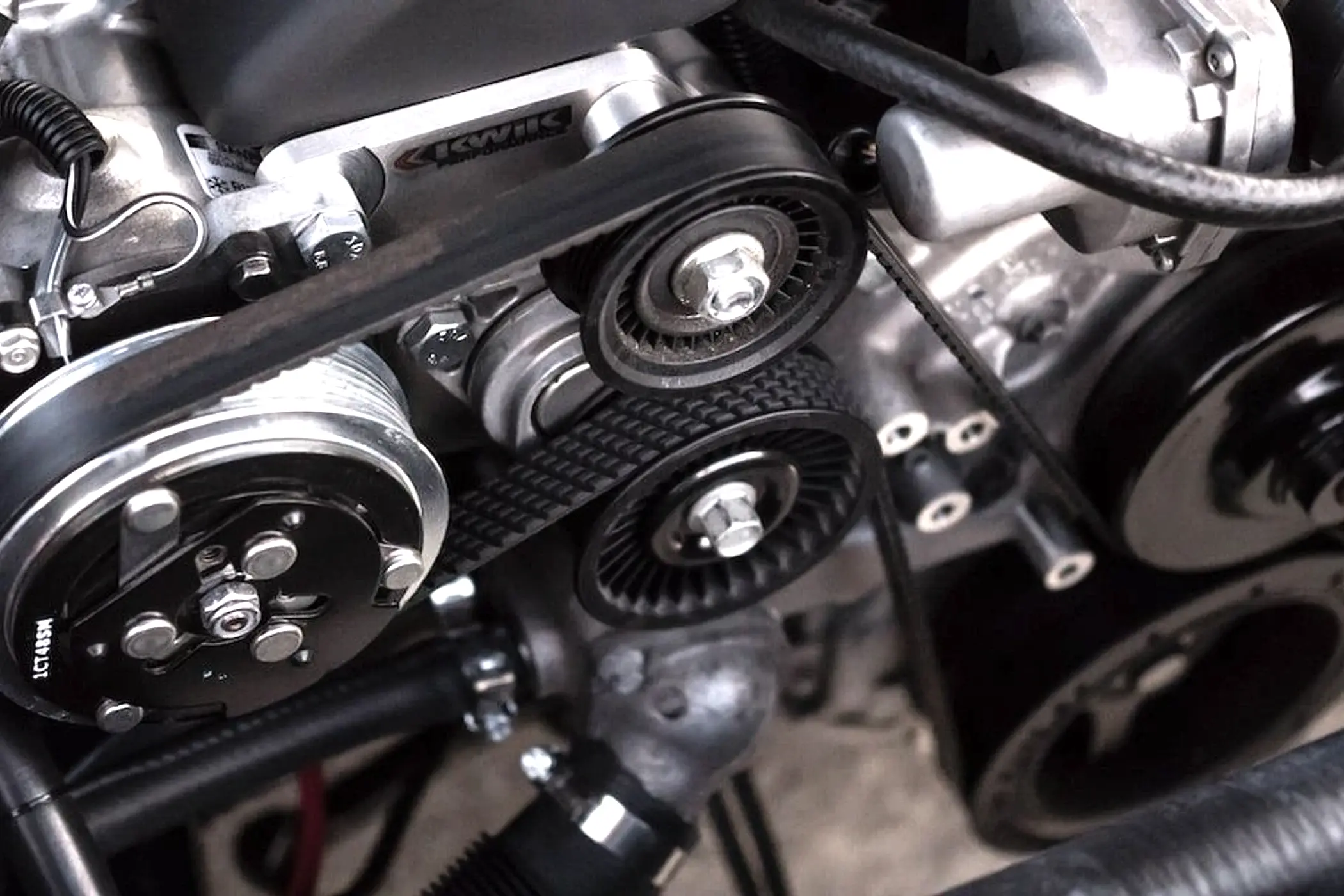
Serpentine Belt
One serpentine belt usually drives your alternator, water pump and power steering, so when it fails you lose charging, cooling and steering assistance at the same time.
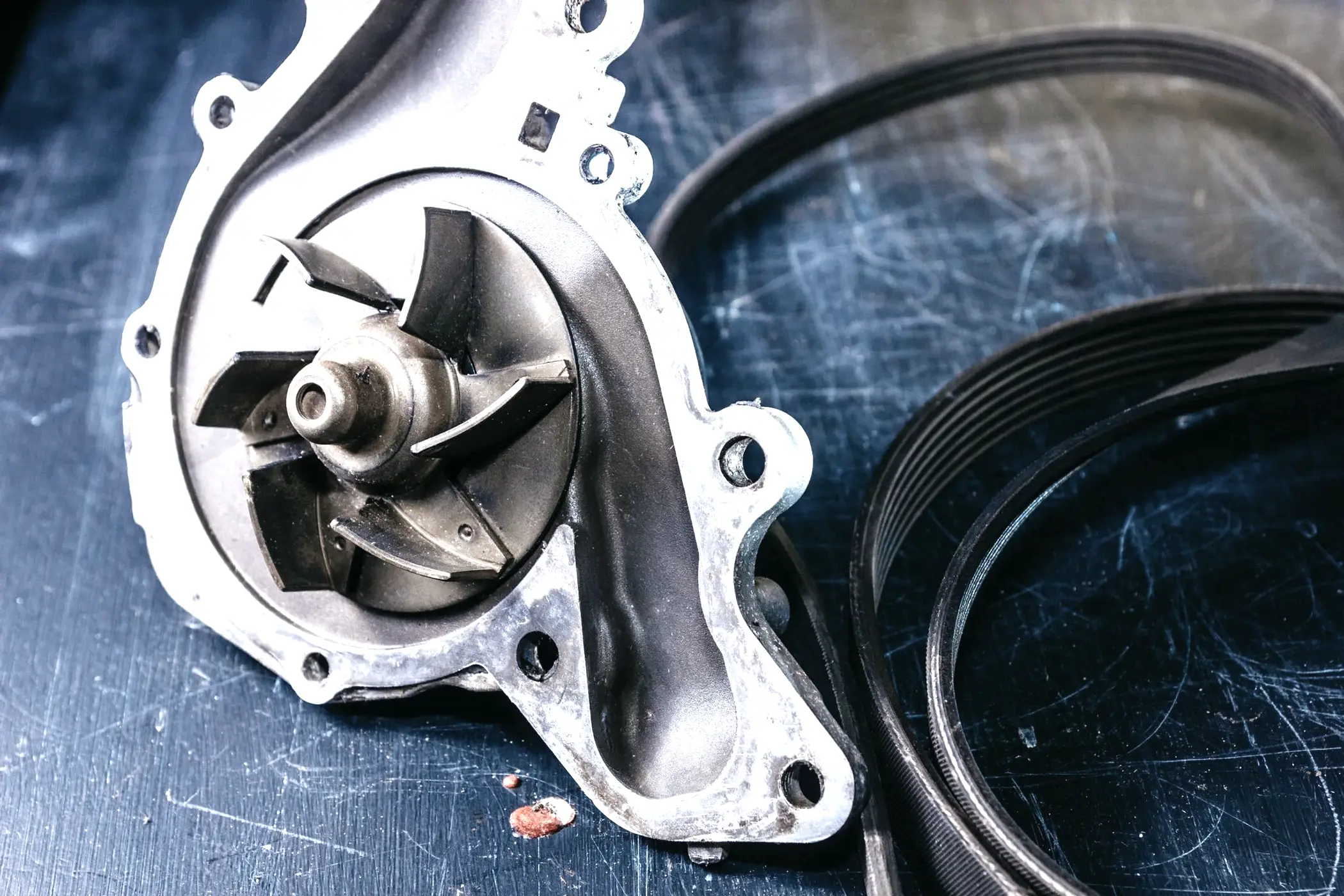
Water Pump Service
The water pump circulates coolant through the engine, and when it fails, coolant stops moving and the engine overheats within minutes no matter how full the system is.
Belts and Hoses
Belts and hoses are rubber parts that perish with age and heat, and when one fails it usually takes something more expensive with it or leaves you stopped at the roadside.

Preventative Maintenance
Preventative maintenance is servicing components on a schedule so they are replaced while they still work, rather than waiting for the failure and the damage that comes with it.
Cooling System
An engine that overheats even briefly can warp a cylinder head, so a cooling system problem is one of the few faults where continuing to drive genuinely makes it far more expensive.
Vehicle Tune-Ups
A tune-up replaces the ignition and filter parts that wear out: spark plugs, ignition coils, air and fuel filters, and the PCV valve.