
Car AC Repair in Redwood City, and Why It Blows Warm
If your air conditioning blows warm, takes far longer to cool than it used to, or smells musty when you switch it on, the system has a fault rather than simply being low. Bring it to Five Points Tire and we will test and scan the system to find where the cooling is being lost before anything is replaced.
Car AC repair at Five Points Tire, in short
Five Points Tire tests and scans car air conditioning systems in Redwood City to find where the cooling is being lost. Because the system is sealed, low refrigerant means a leak, so we look for the cause rather than topping it up and sending you away. Warm air and weak airflow are different faults, and the test tells us which one you have.
Car air conditioning is one of the few systems that fails politely. It doesn't strand you. It just gets a little worse each summer until one day it's blowing warm.
That slow decline is also why so many people end up paying twice. A top-up makes it cold again, so it feels fixed. Then next July you're back where you started.
The reason is worth understanding, because it changes what you should ask for.
Here's how the system works, what each symptom points at, and what we actually check when you bring it in to Redwood City.
How car air conditioning actually works
Your AC doesn't make cold. It moves heat, and it moves it from inside your car to outside it.
Refrigerant gets compressed, which makes it hot. It sheds that heat through the condenser at the front of the car. Then it's allowed to expand inside the dashboard, which makes it very cold.
Cabin air blowing across that cold part loses its heat, and that's what reaches you through the vents.
The whole thing is a sealed loop. Nothing is consumed, and nothing gets used up.
That last point is the one that matters most, and we'll come back to it.
The parts, and what goes wrong with each:
- Compressor: Pumps the refrigerant round. Fails from age, from running low on oil, or from the clutch burning out.
- Condenser: Sits in front of the radiator and sheds heat. Gets blocked by road debris or punctured by stones.
- Evaporator: Behind your dash. This is what gets cold, and what grows the smell.
- Expansion valve: Meters refrigerant into the evaporator. Sticks, and then you get no cooling at all.
- Receiver drier: Absorbs moisture. Saturates over time, especially after the system has been opened.
- Cabin air filter: Not part of the loop, but it's the most common cause of weak airflow.
A sealed system cannot use refrigerant up. If the system is low, it is leaking. That is the whole argument against a top up as a repair: the same amount of gas will be gone again by next summer, and you will have paid to fill the same leak twice.
Signs you need car AC repair
- Air comes out warm, or only gets cold once you are moving
- It takes much longer to cool the car down than it did last summer
- A damp or musty smell for the first minute after you turn it on
- The fan is loud but not much air actually reaches the vents
- You can hear the compressor clicking on and off every few seconds
- Water pooling in the passenger footwell
Air conditioning symptoms and what they usually mean
| What you notice | What it usually means | How urgent |
|---|---|---|
| Plenty of air, but it is warm | Refrigerant loss, or the compressor not engaging | Book it in |
| Cold air, but very little of it | Blower fault or a clogged cabin air filter | Book it in |
| Cools only once you are moving | Airflow across the condenser, often a fan fault | Soon |
| Musty smell for the first minute | Condensation on the evaporator, worse with an old filter | Monitor |
| Compressor clicking on and off repeatedly | Low refrigerant, or a pressure switch fault | Soon |
| Water in the passenger footwell | Blocked evaporator drain | Soon |
Warm air and weak airflow are different faults. The distinction points at the repair.
What our team does for car AC repair
- 01Test and scan the air conditioning system to identify the fault
- 02Check the system for refrigerant leaks before putting any gas into it
- 03Recharge the refrigerant once the system holds pressure
- 04Replace the cabin air filter where it is the cause of the smell or the weak airflow
Warm air or weak airflow? They're different faults
Plenty of warm air means a refrigerant problem. Cold air but not much of it means an airflow problem. Those are opposite ends of the system.
Put your hand at the vent. Is there plenty of air coming out, but it's warm? Or is the air cold enough, and there just isn't much of it?
Knowing which you have before you call is worth more than any other detail you can give us.
| What you notice | Where the problem is | Usual cause | How urgent |
|---|---|---|---|
| Good airflow, warm | Refrigerant loop | Leak, or compressor not engaging | Book it in |
| Cold, but weak airflow | Air side | Clogged cabin filter or failing blower | Book it in |
| Cold at speed, warm at a stop | Air across the condenser | Cooling fan not running | Soon |
| Cold then warm after 10 minutes | Refrigerant loop | Icing evaporator, or low charge | Soon |
| Cold on one side only | Blend door | Actuator fault | Book it in |
| Loud fan, little air | Air side | Filter or blocked intake | Monitor |
Checking this before you call saves diagnostic time and usually money.
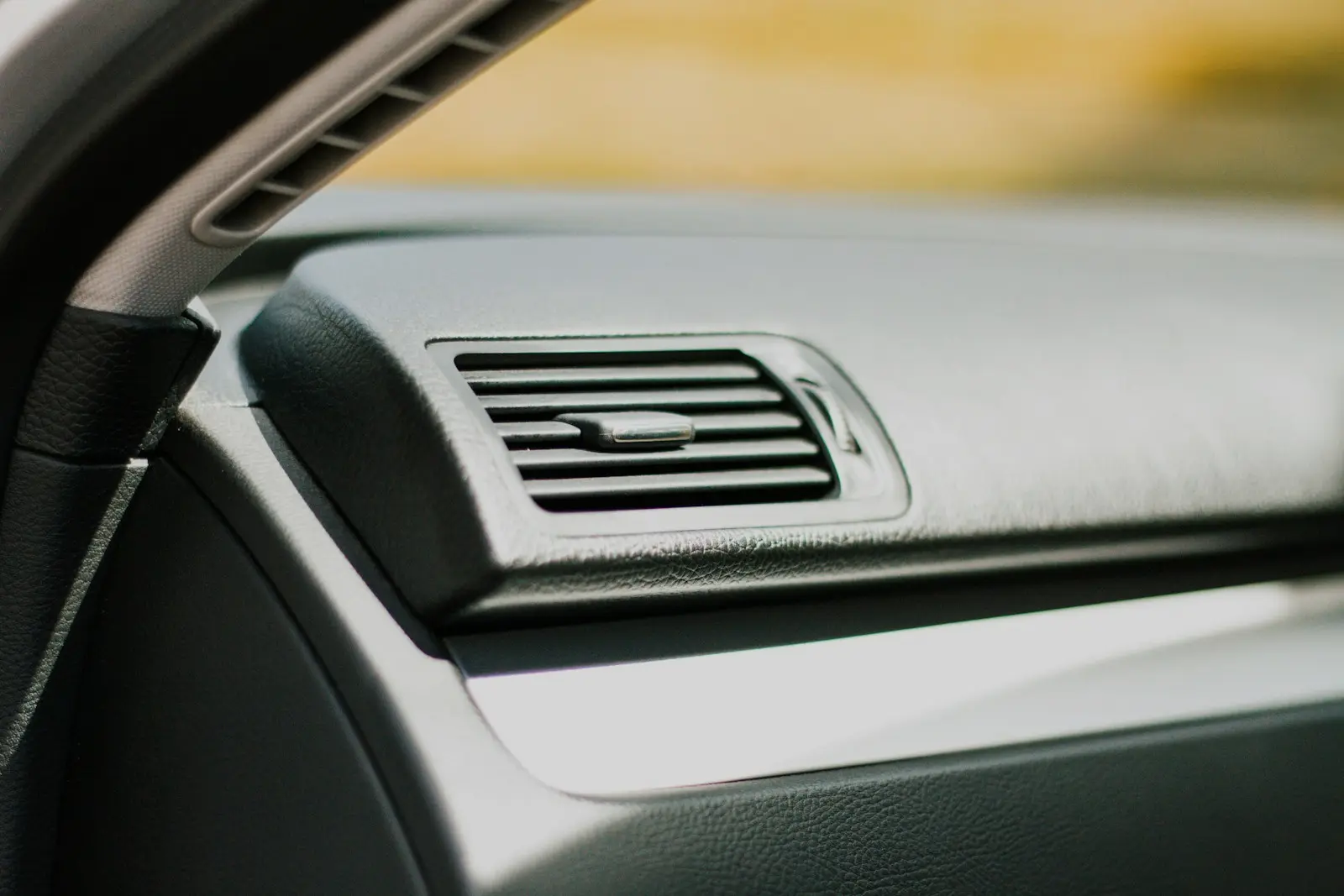
Blocked vents are worth ruling out before anything else. If the air is cold at one vent and barely moving at another, the fault is in the ducting or the blower, not in the refrigerant.
Noise tells you where to look:
- Rattling or grinding when the AC is on Usually the compressor. It is the one part of the system under real mechanical load, and it is the expensive one to leave running.
- A loud fan with little air at the vents Leaves and road debris collecting around the blower, or a cabin air filter clogged enough to choke it.
- Clicking on and off every few seconds The system is cycling because pressure is low, which points at a leak rather than a part that has failed outright.
Why a top-up isn't a repair
A sealed loop can't consume refrigerant. There's no combustion, nothing burns off, nothing wears away.
So if your system is low, it is leaking. That's not a maybe.
Adding gas will absolutely make it cold again, and it'll stay cold for a while. Then the same amount escapes through the same hole and you're back.
That's why we look for the leak first. It's the difference between fixing it once and filling it every year.
Leaks hide well, too. Refrigerant escapes as a gas, so there's usually nothing to see on the driveway.
Where AC leaks usually turn up:
- O-rings and seals: Rubber hardens with age and heat. The most common leak by a wide margin.
- The condenser: Right behind the grille, so it takes stone chips and road salt.
- Hose crimps: Where rubber hose meets metal fitting.
- The compressor shaft seal: Often shows up as oily residue around the compressor.
- The evaporator: Rare, but the worst one, because it's behind the whole dashboard.
- Service ports: A failed valve core is cheap and easily missed.
Why your AC smells musty
The musty smell is condensation on the evaporator behind your dash, plus whatever organic debris made it past the cabin filter and found somewhere damp to sit.
The evaporator runs cold, so moisture condenses on it. That's normal, and it's meant to drain out under the car. It just doesn't dry out completely between trips.
A clogged cabin filter makes it dramatically worse, because it holds damp debris directly in the airflow.
So the first thing worth trying is almost always the cheapest thing.
What actually helps, roughly in order:
- Replace the cabin air filter. Fixes it outright a good share of the time.
- Check the evaporator drain. If it's blocked you'll often find water in the passenger footwell too.
- Run the fan without AC for the last few minutes of a drive. Dries the evaporator before you park.
- Have the evaporator treated. For a smell that survives the first three.
Want it checked? Describe what the car is doing and Five Points Tire will tell you whether it needs car AC repair or something else. Call 650-365-0280, or send the form and someone calls you back. Request an appointment
What you are smelling is mold and bacteria growing on a permanently damp surface, and it collects in the cabin air filter as much as on the evaporator. That is why a filter change fixes some cars and does nothing for others.
Should you run the AC in winter?
Yes, and it's worth making a habit of it.
The compressor has seals that need refrigerant oil circulating to stay soft. Leave it unused for six months and those seals dry out and start to leak.
Running it for five or ten minutes every couple of weeks keeps oil moving through the system.
There's a practical reason too. Your AC is a dehumidifier, so it clears a fogged windshield far faster than heat alone. Most cars run it automatically on the defrost setting for exactly that reason.
R-134a and R-1234yf, and why it matters to you
Cars built up to roughly the mid-2010s use R-134a. Newer ones use R-1234yf.
They are not interchangeable, they use different service fittings, and they're priced very differently.
It matters to you mostly because it affects what a repair costs, and because a shop needs the right equipment for your car.
Worth mentioning your year and model when you call, so nobody's guessing.
| R-134a | R-1234yf | |
|---|---|---|
| Typical vehicles | Up to around 2014 | Roughly 2015 onward |
| Cost | Lower | Considerably higher |
| Service fittings | Older standard | Different, not compatible |
| Mixing them | Never | Never |
Check your under-hood sticker if you're not sure which your car takes.
Common AC mistakes to avoid
- Topping it up and calling it fixed. If it was low, it's leaking. You're buying the same gas twice.
- Using a parts-store can with sealant in it. Sealant can clog the expansion valve and contaminate recovery equipment, which turns a small repair into a big one.
- Assuming weak airflow is an AC fault. Nine times out of ten a car that blows cold but weak just needs a cabin filter.
- Ignoring water in the passenger footwell. That's a blocked evaporator drain, and left alone it soaks carpet and wiring.
- Never running it in winter. Unused compressor seals dry out and leak. A few minutes every couple of weeks prevents it.
- Blocking the condenser. Front-mounted plates, light bars and packed-in leaves all cut airflow where the system sheds its heat.
The bottom line
Before you call anyone, do one check: is the air warm, or is there just not much of it?
That single answer tells a shop which half of the system to look at, and it's the difference between a quick diagnosis and an hour of hunting.
If it's warm air, expect us to look for a leak rather than reach for a can. The system is sealed, so low means leaking, and filling it again just resets the clock.
A musty smell is more often the cabin air filter than the air conditioning. Where the fault is electrical rather than mechanical, diagnostics finds it, and refrigerant is one of the things a fluid inspection covers, all of it on the same service schedule.
Call Five Points Tire on 650-365-0280 and describe what it's doing. We'll tell you what it probably is before you bring it down, because a system that needs a seal is not a system that needs gas.
Why is my car's air conditioning blowing warm air?
- Most often the system has lost refrigerant through a leak, because it is a sealed loop and cannot use gas up on its own. It can also be an electrical fault stopping the compressor from engaging, or a blockage in the loop. Testing tells you which, and that matters because the three have very different repairs.
Can you just top it up with refrigerant?
- Adding refrigerant will usually make it cold again for a while, but if the system was low then it was leaking, and it will be low again. We would rather find the leak first so you are not paying to fill the same system twice.
Why does my air conditioning smell musty when I first turn it on?
- Condensation collects on the evaporator behind your dashboard and does not always dry out fully. A clogged cabin air filter makes it worse by holding damp debris right in the airflow. Changing the filter is the usual first step.
Should I use the air conditioning in winter?
- Yes, and it helps to. Running it for a few minutes every couple of weeks keeps the compressor seals lubricated, which is what stops them drying out and leaking. It is also what clears a fogged windshield fastest. Five Points Tire checks compressor and seal condition during regular servicing, which is when a slow leak gets caught rather than topped up.
Why is my car's air conditioning making a rattling or grinding noise?
- A rattle or grind that only appears when the AC is switched on usually points at the compressor, which is the one part of the system doing real mechanical work. Debris caught around the blower fan makes a similar noise, so it is worth having it looked at before the compressor fails and puts metal through the rest of the system.
Related services
Cabin Air Filter
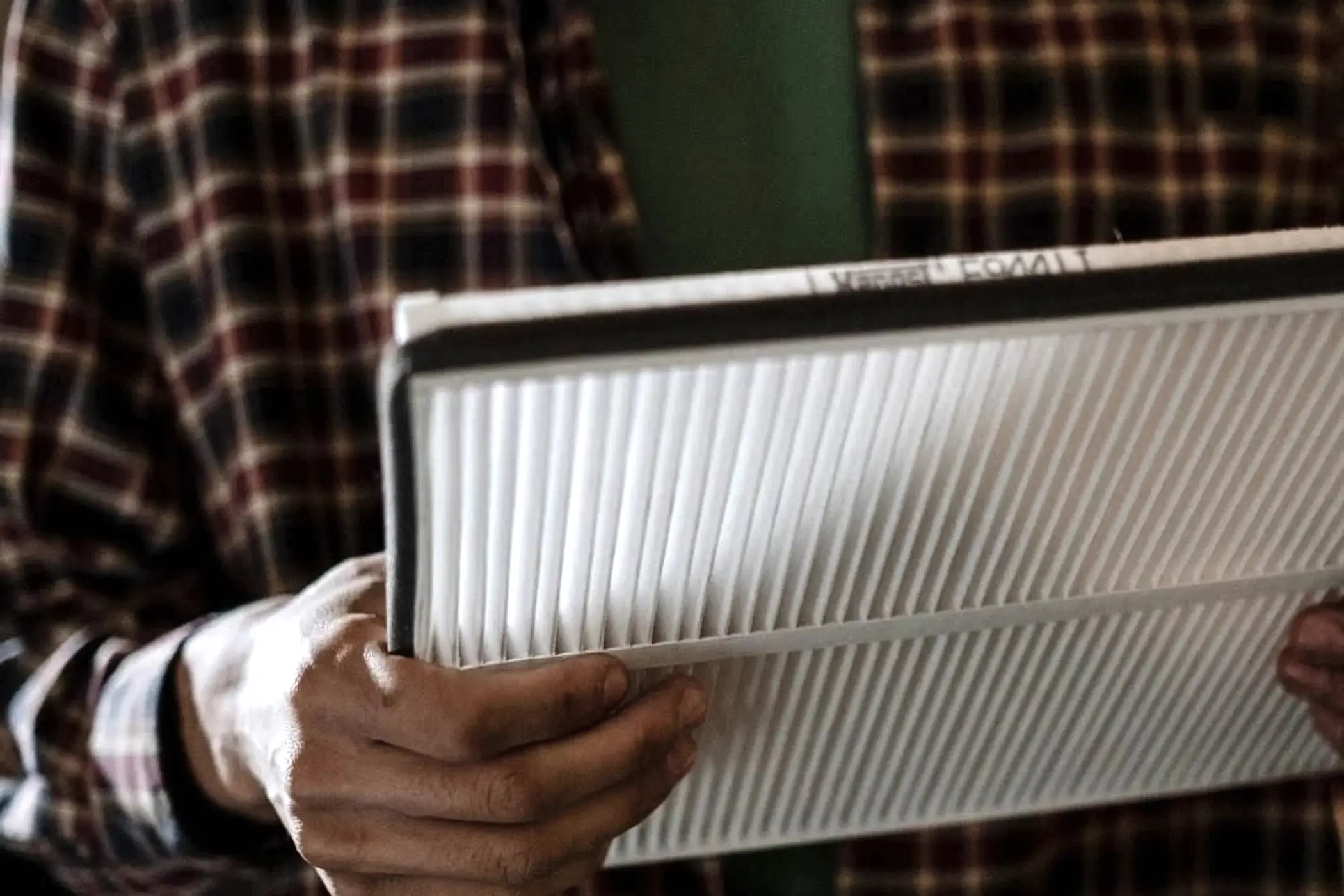
The cabin air filter cleans the air coming into your vents, and when it clogs your airflow drops, the windows take longer to demist, and the car starts to smell musty.

Diagnostics
Modern vehicles record faults across dozens of electronic modules, and a proper diagnosis reads that data and then tests to confirm the cause rather than guessing from the code.

Fluid Inspections
Every major system in your car runs on a fluid, and most of them fail quietly by degrading rather than by running out.

Preventative Maintenance
Preventative maintenance is servicing components on a schedule so they are replaced while they still work, rather than waiting for the failure and the damage that comes with it.
Belts and Hoses
Belts and hoses are rubber parts that perish with age and heat, and when one fails it usually takes something more expensive with it or leaves you stopped at the roadside.
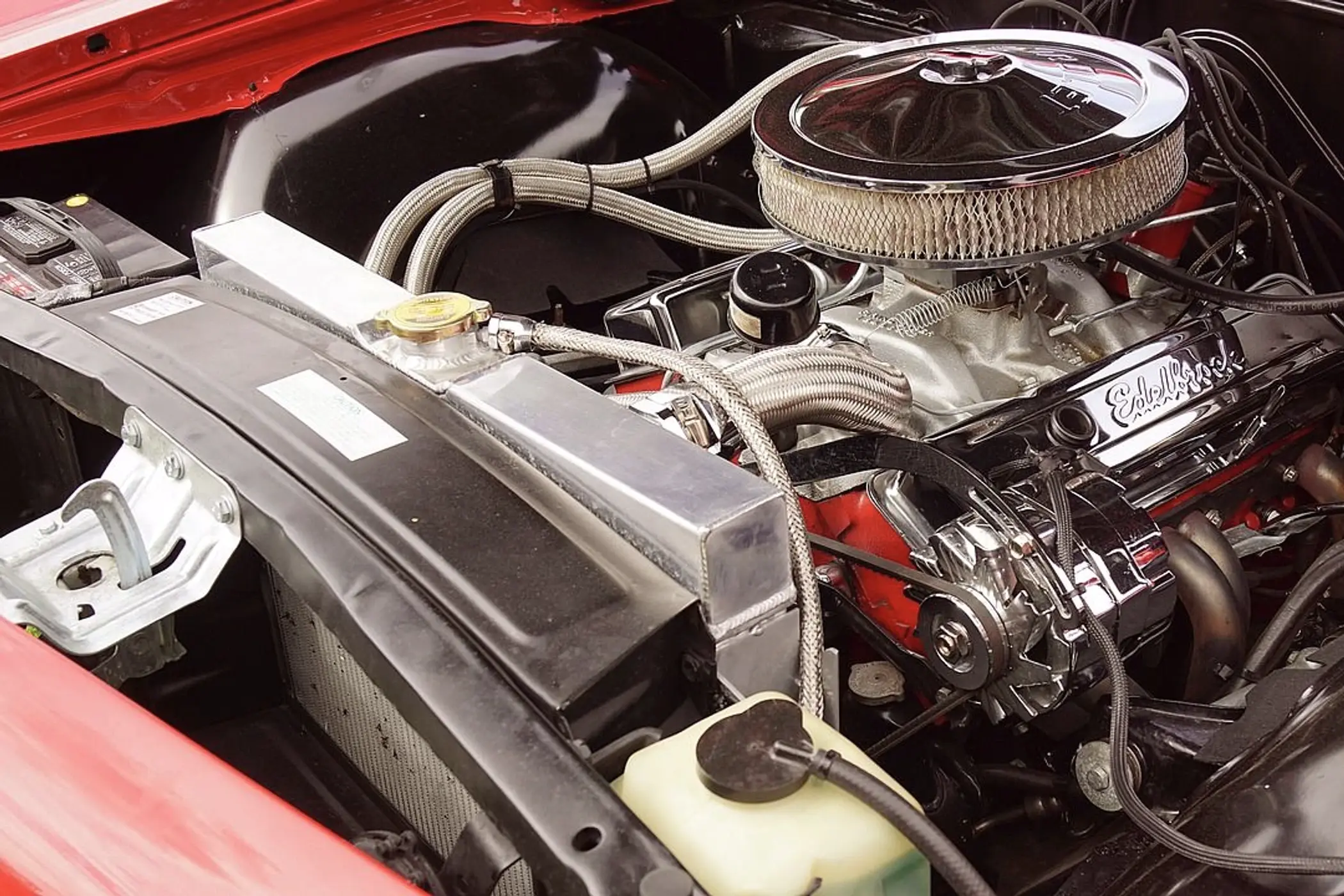
Engine Air Filter
The engine air filter stops dust and grit reaching the inside of your engine, and as it clogs the engine has to work harder to breathe, which costs you power and fuel.